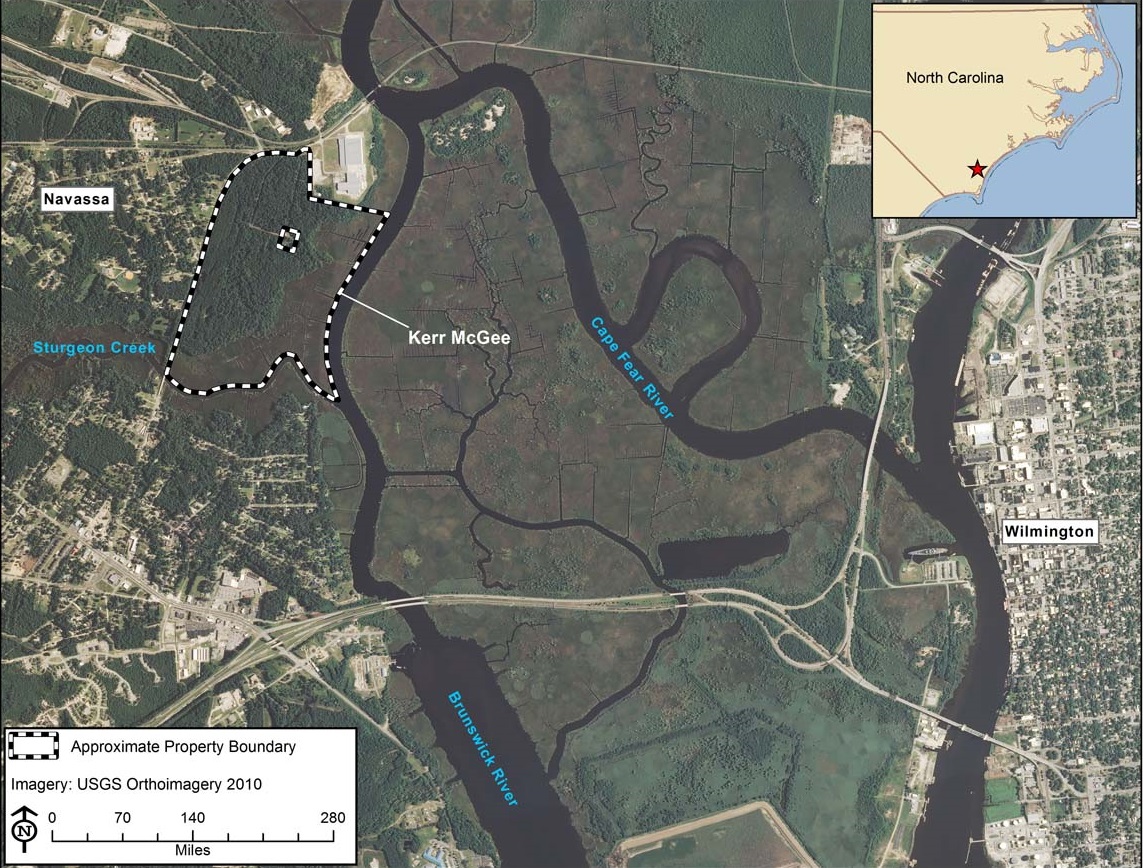
In partnership with the North Carolina Division of Parks and Recreation, the Federation restored approximately 10 acres of wetland habitat in Carolina Beach State Park. This is one of several habitat restoration projects selected by the natural resources trustee agencies (NOAA, USFWS, NCDEQ) to address environmental damages caused by 40 years of operations by the Kerr-McGee Chemical Corps. Located in Navassa (Brunswick County), the former Kerr-McGee facility treated wood products with creosote, leaving sediments and water on site laden with polycyclic aromatic hydrocarbons (PAH).
These chemicals adversely affect ecological services by contaminating all levels of the aquatic food web and surrounding habitats to the point of ecological degradation. The site is now listed as the Kerr-McGee Superfund site.
Project Purpose
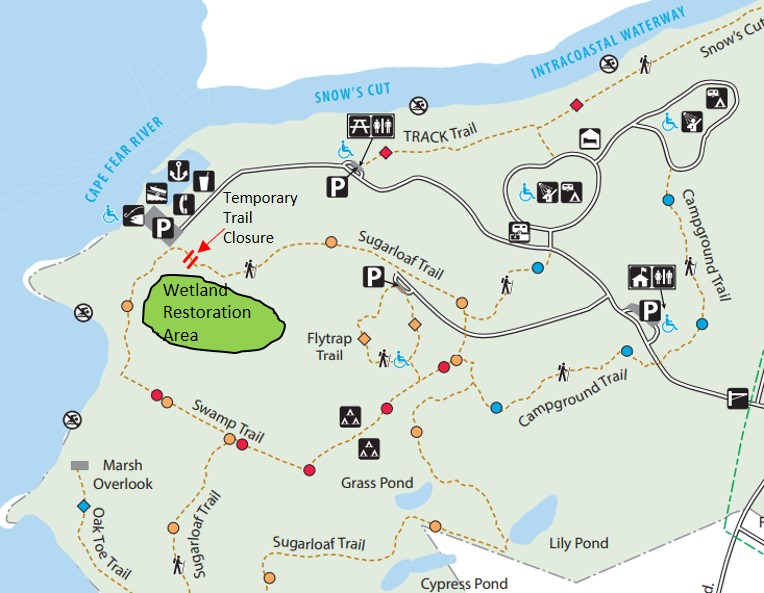
The goal of the Carolina Beach State Park project was to address the resource injury through restoration of similar habitats in the Lower Cape Fear River region. The project aimed to restore and enhance tidal marsh habitat between the Sugarloaf and Swamp Trails, an area that has been highly disturbed. The land is owned by the US Department of Defense and managed by the Military Ocean Terminal Sunny Point as part of its safety buffer zone. Although the site was once an area of healthy tidal marsh, it became dominated by an early successional invasive plant species, Phragmites australis. The park and its partners have worked to remove the Phragmites through burning, pesticide treatment, and cutting.
Wetland Restoration
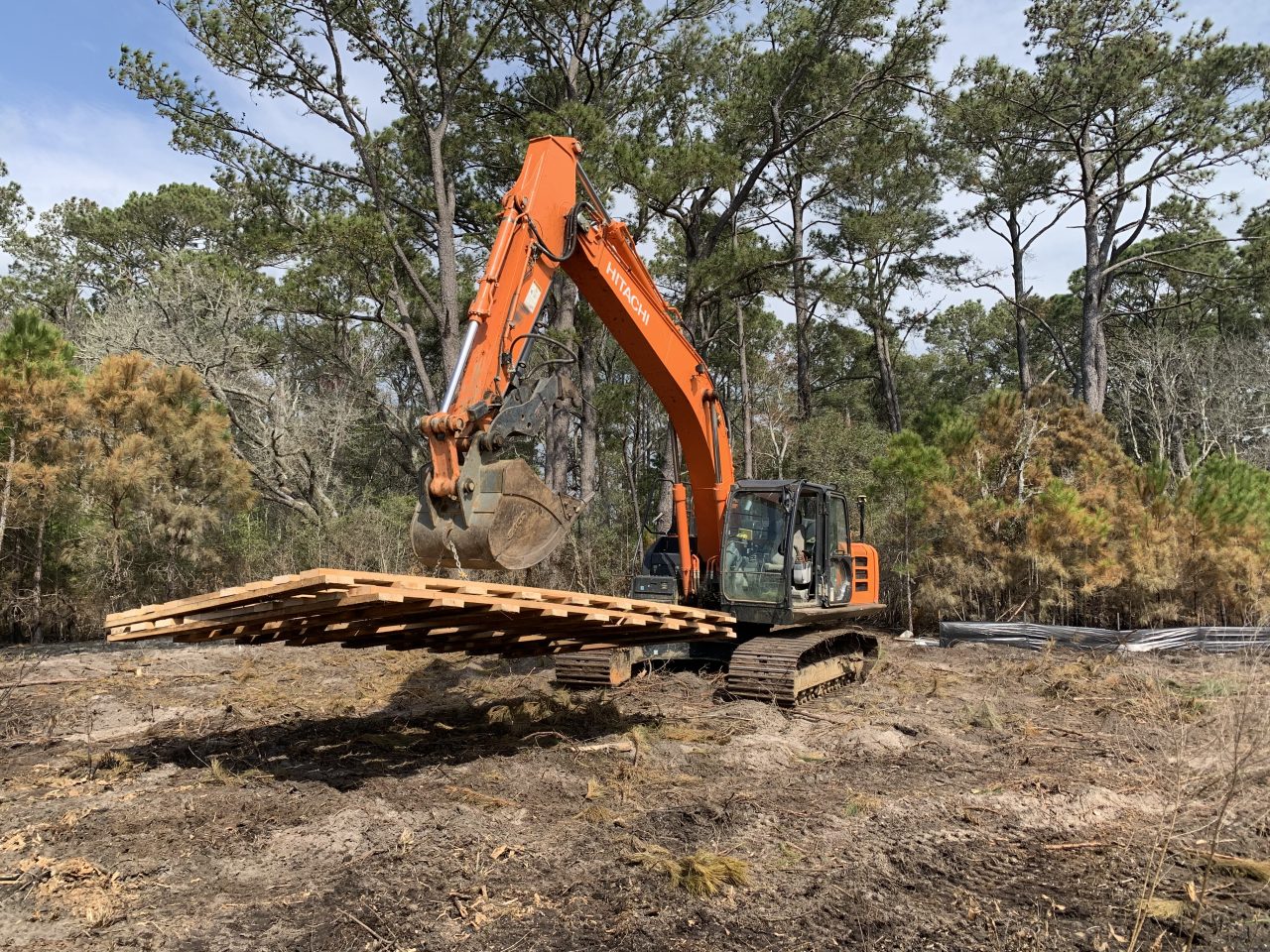
The Federation and contractors worked with the park to design the native tidal wetland, which was implemented in phases over 3 years:
- Invasive species removal
- Creation of a slough (a shallow swale of varying depths) through the removal of fill material and grading
- Native vegetation planting
- Monitoring vegetation success
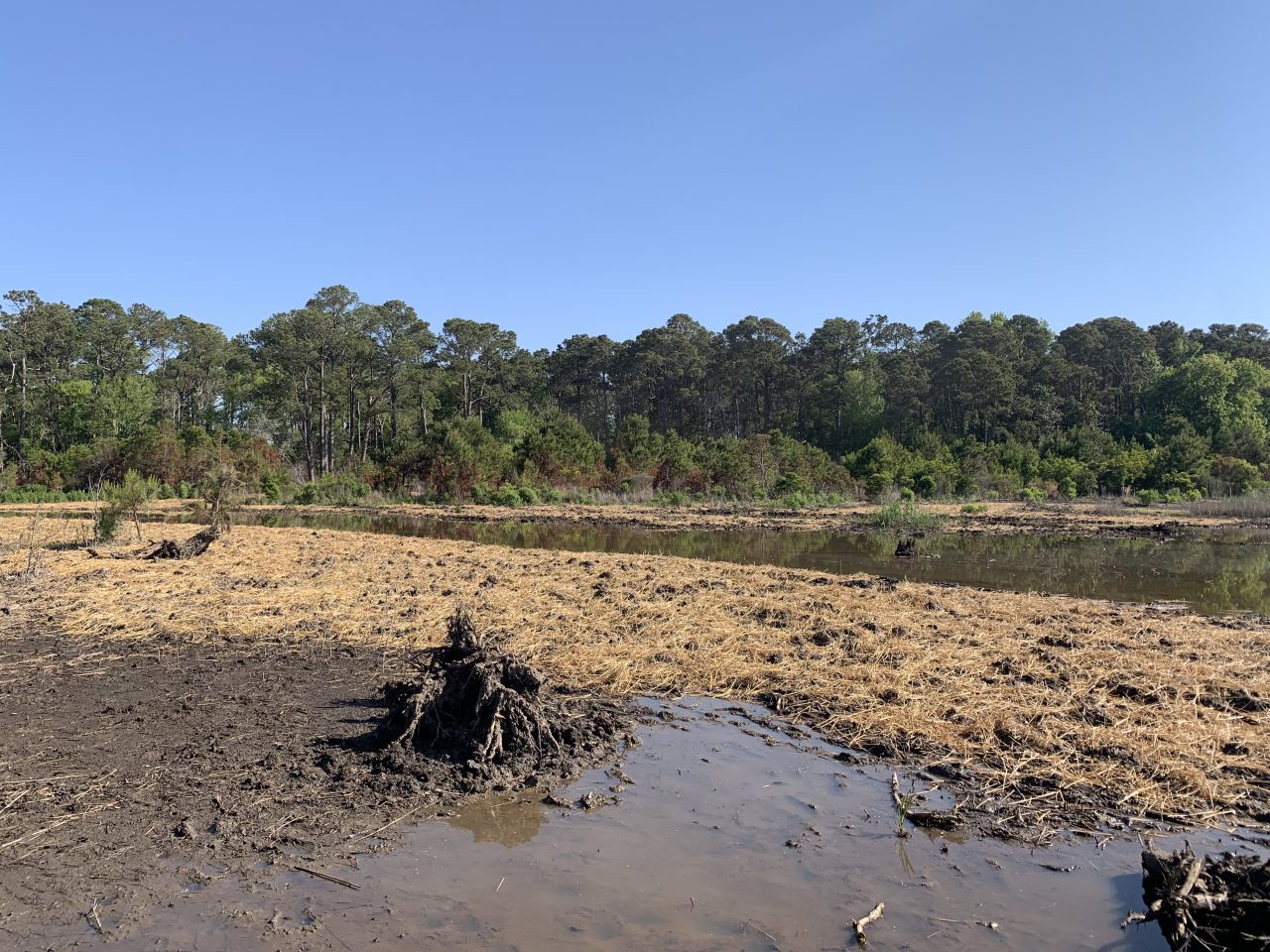
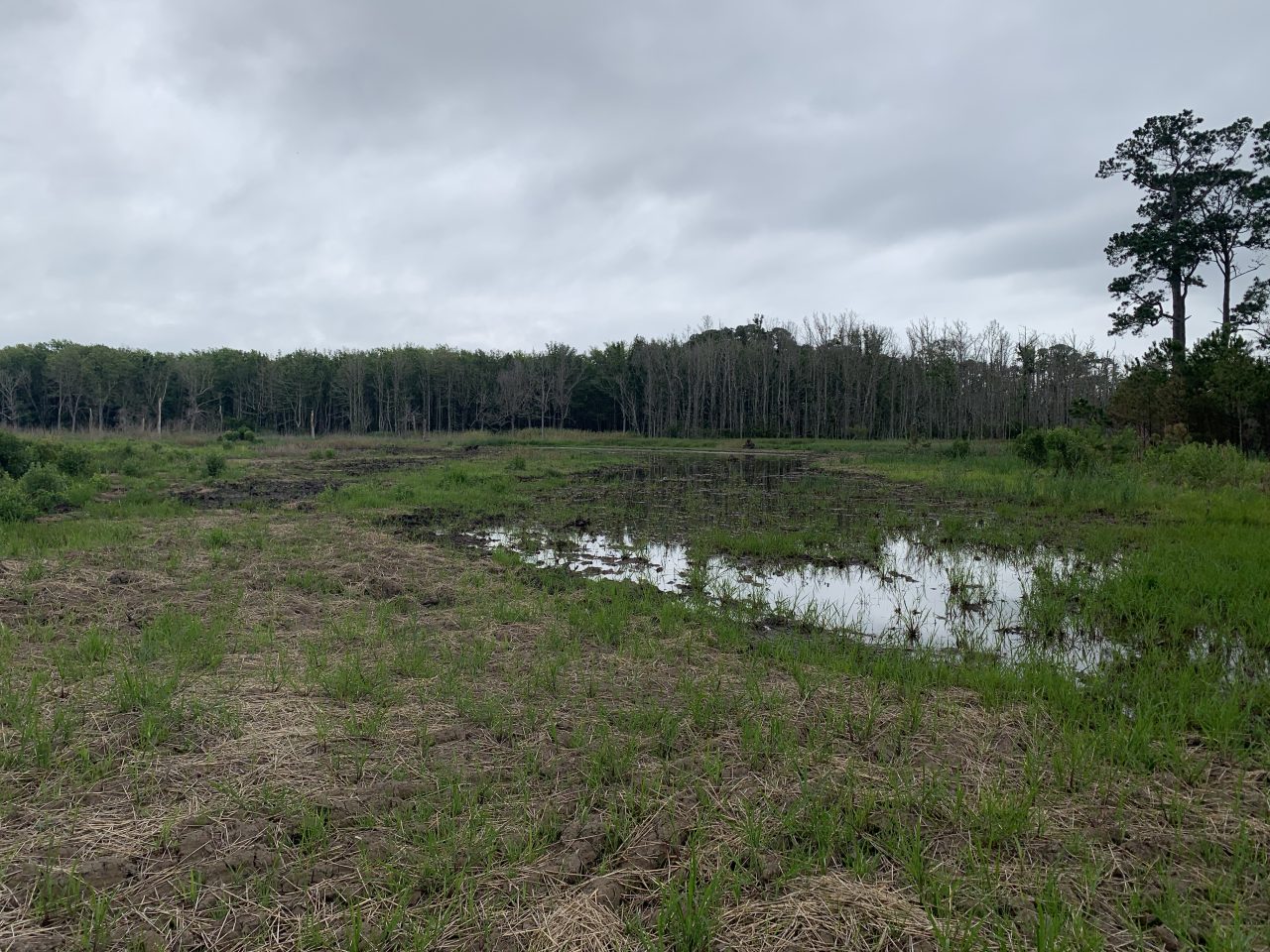
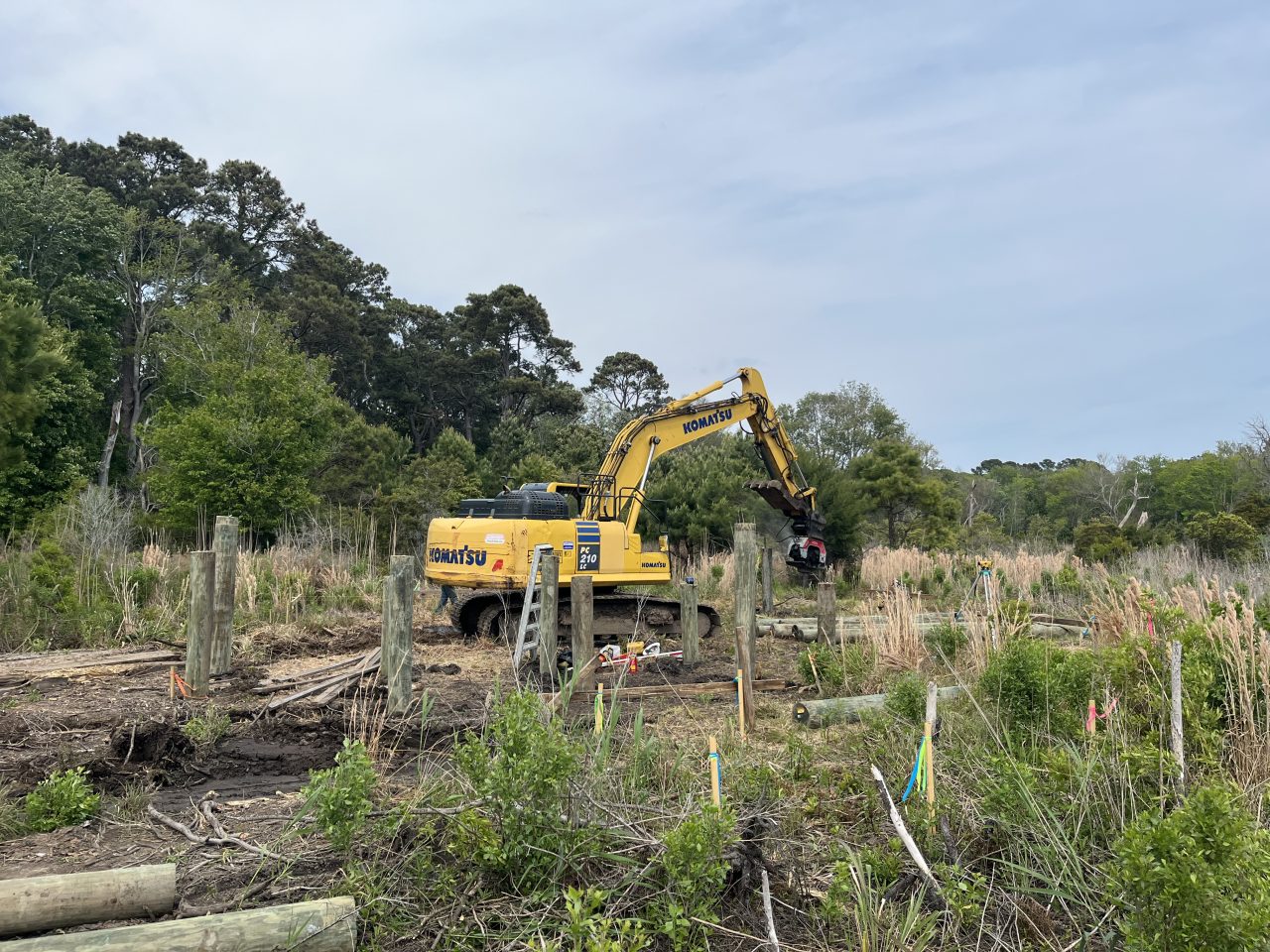
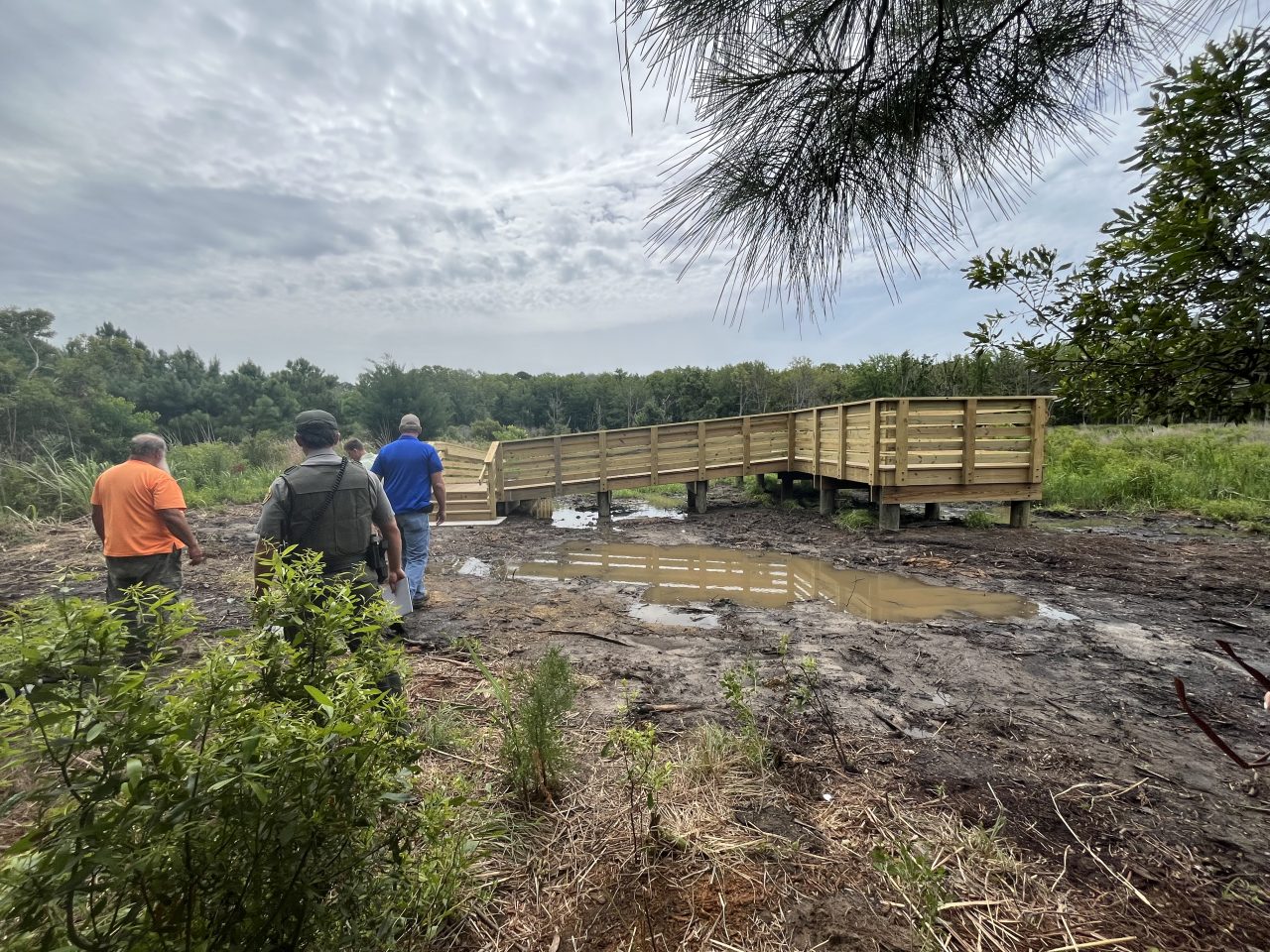
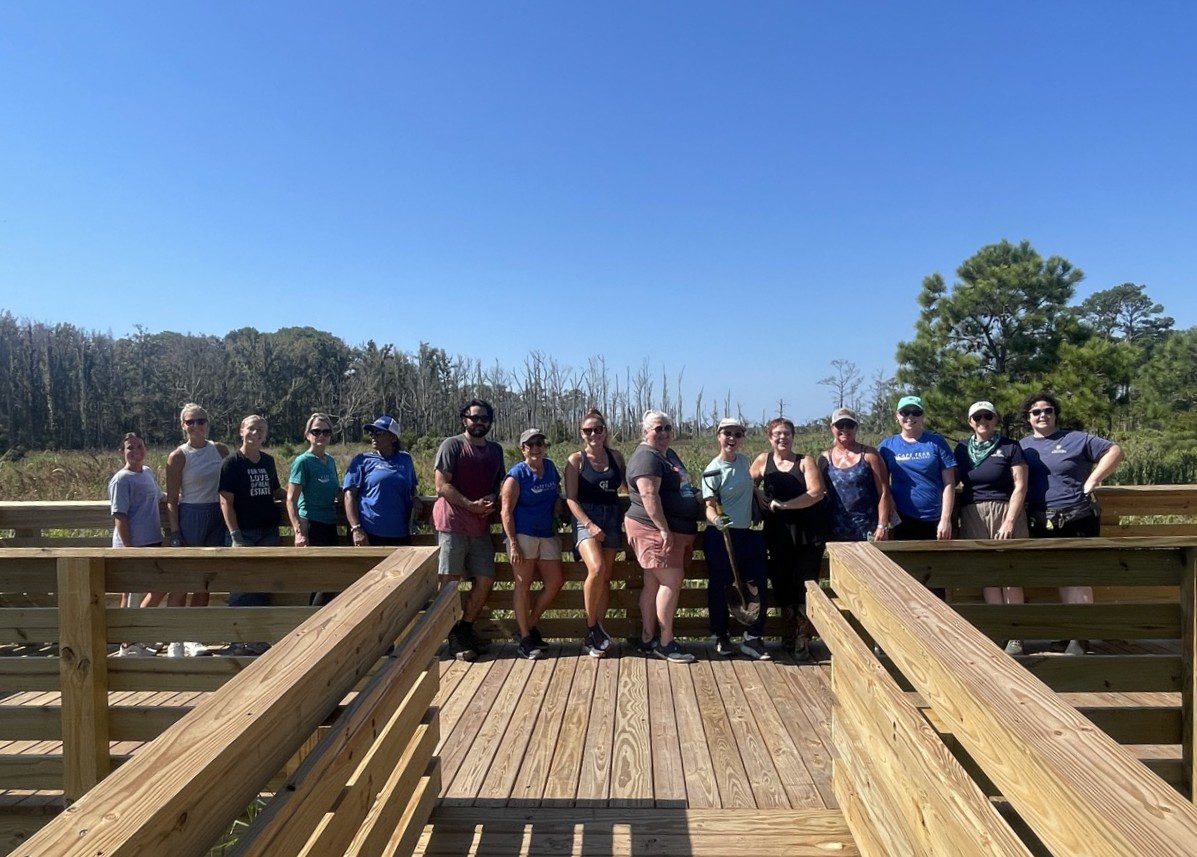
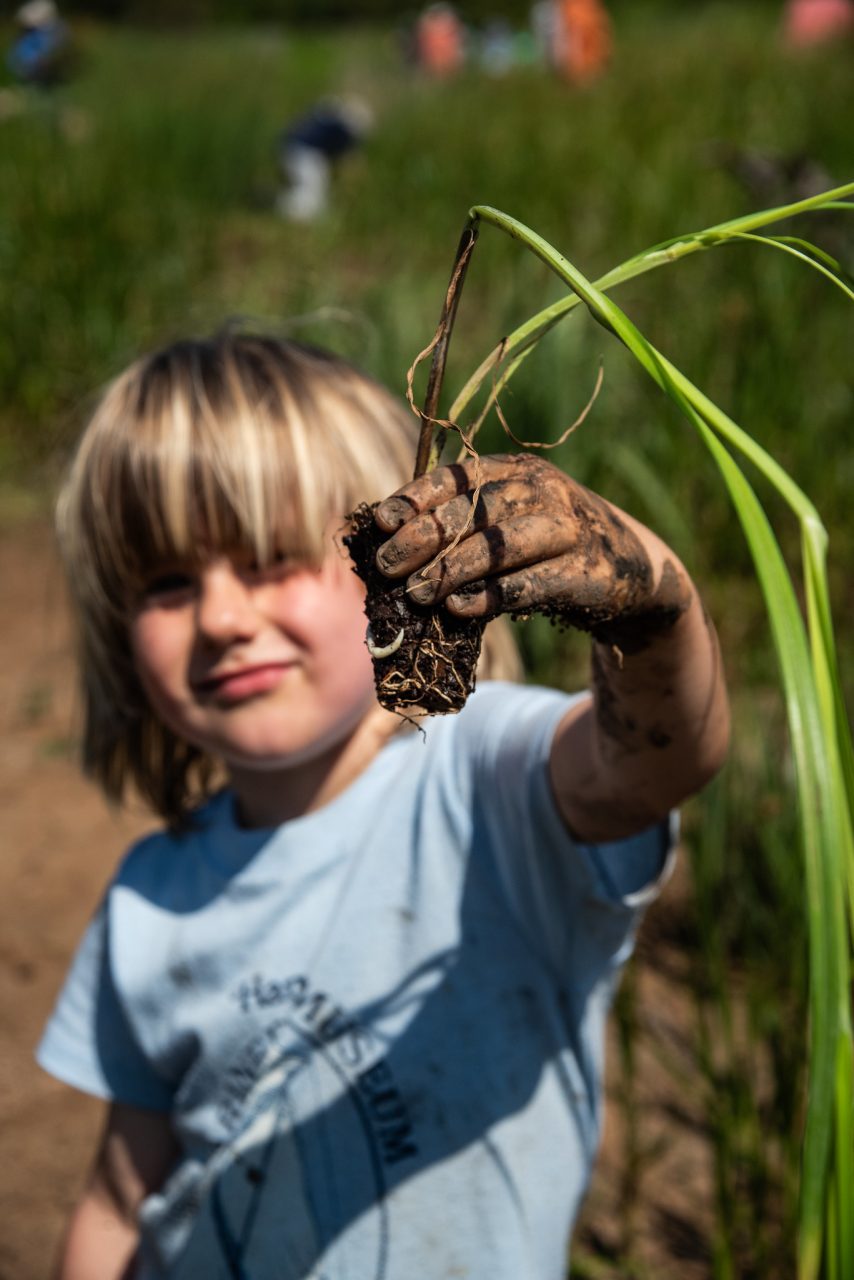
Over 3 years of restoration activities, more than 260 volunteers of all ages from the region have contributed to planting native species beneficial to the wetland. Community groups, including Friends of Pleasure Island State Parks, Cape Fear Realtors, University of North Carolina Wilmington, NC Sea Grant, Fort Fisher Aquarium, Carolina Beach Trash Walkers, Thermo Fisher Scientific, Pleasure Island Soccer Association, and many individuals, have worked in service to the restoration efforts at the park.
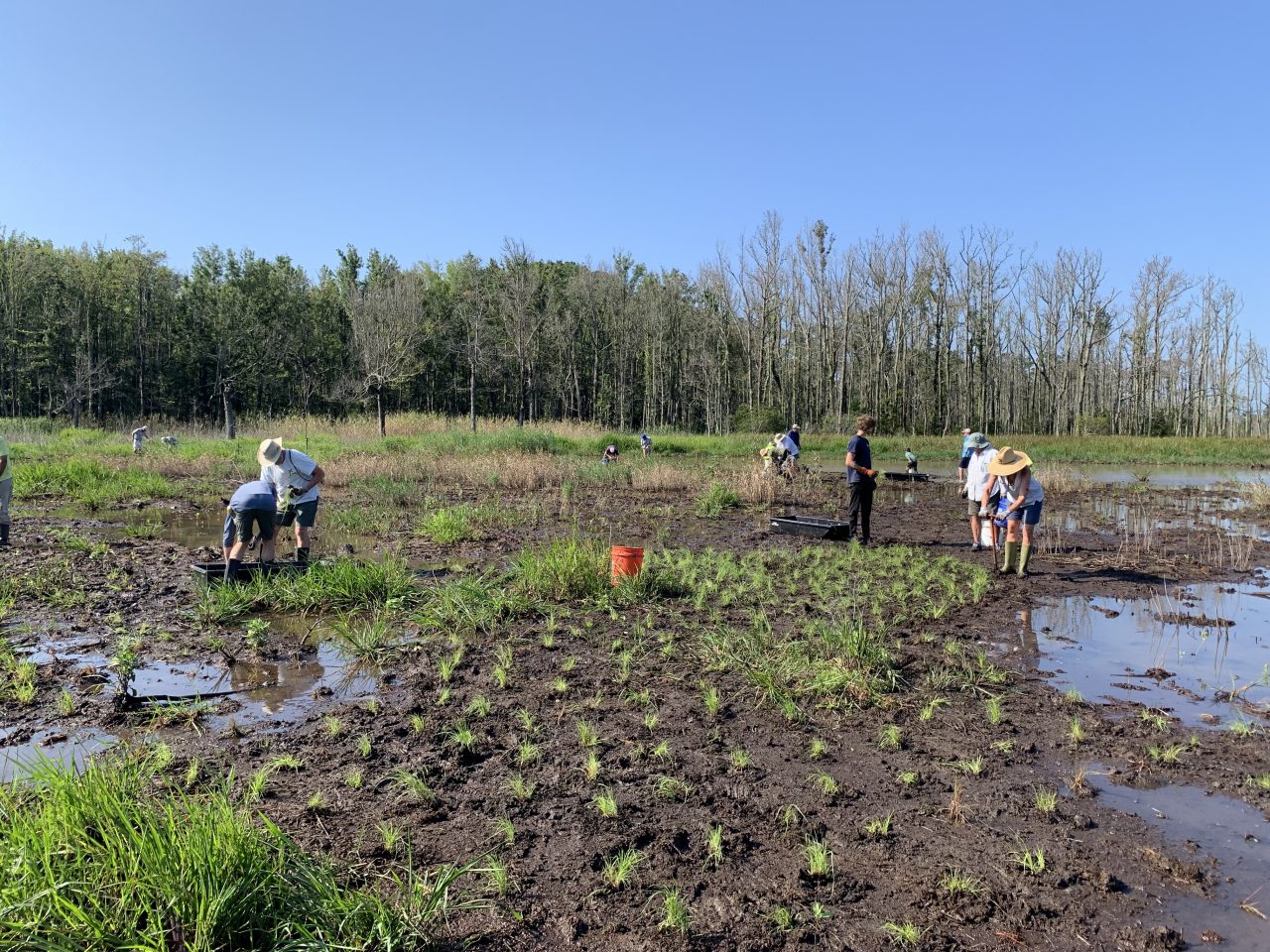
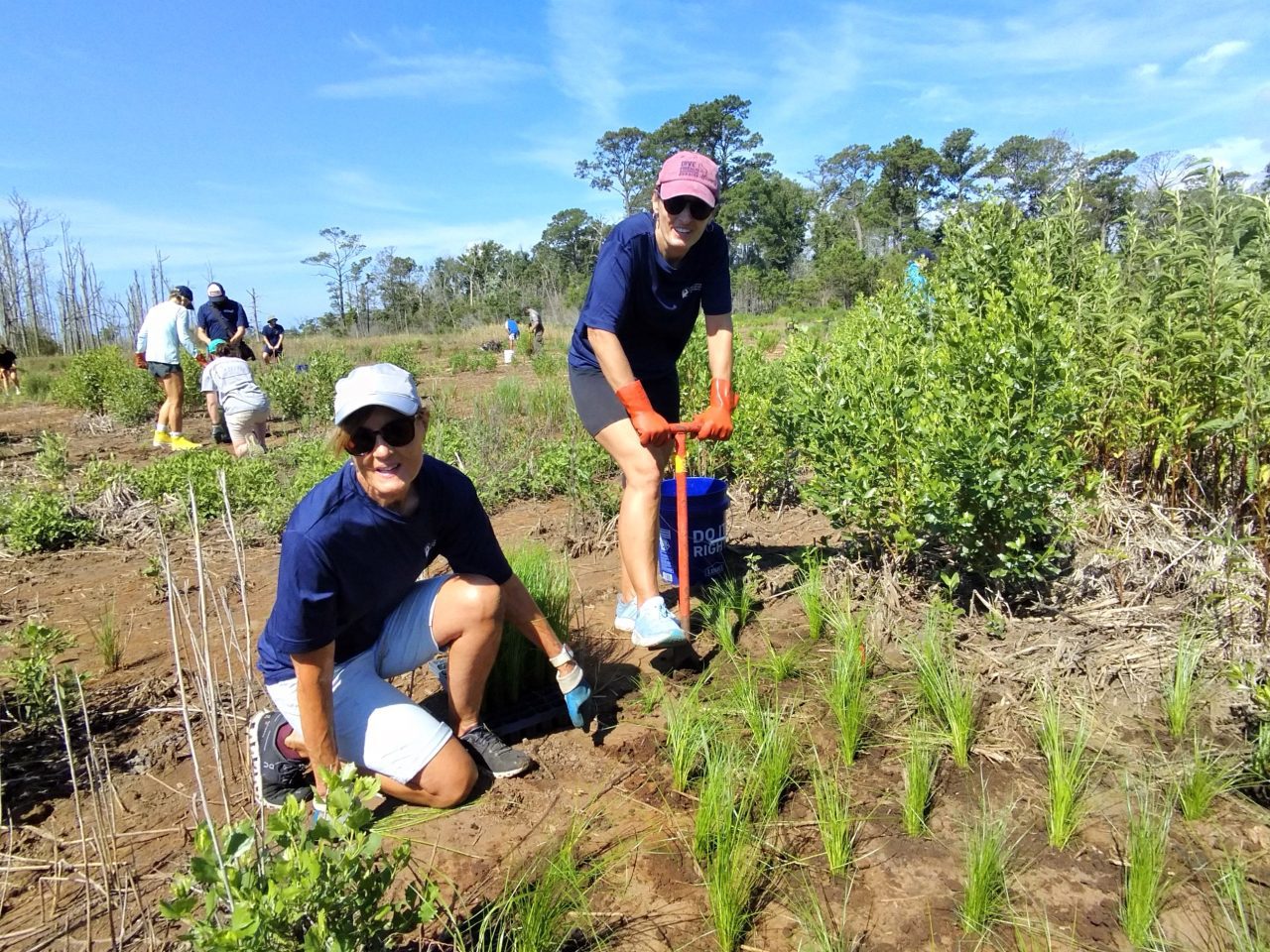
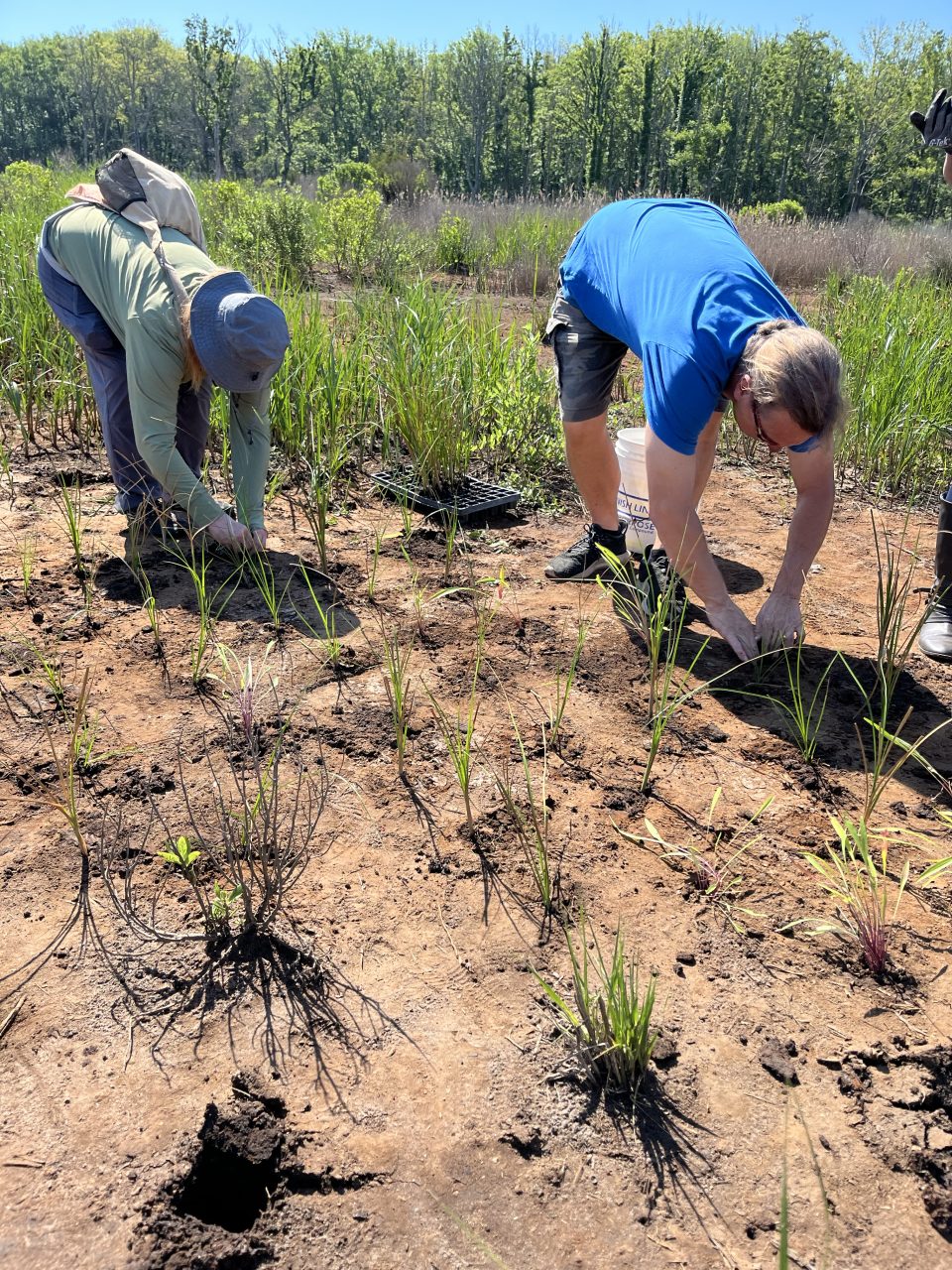
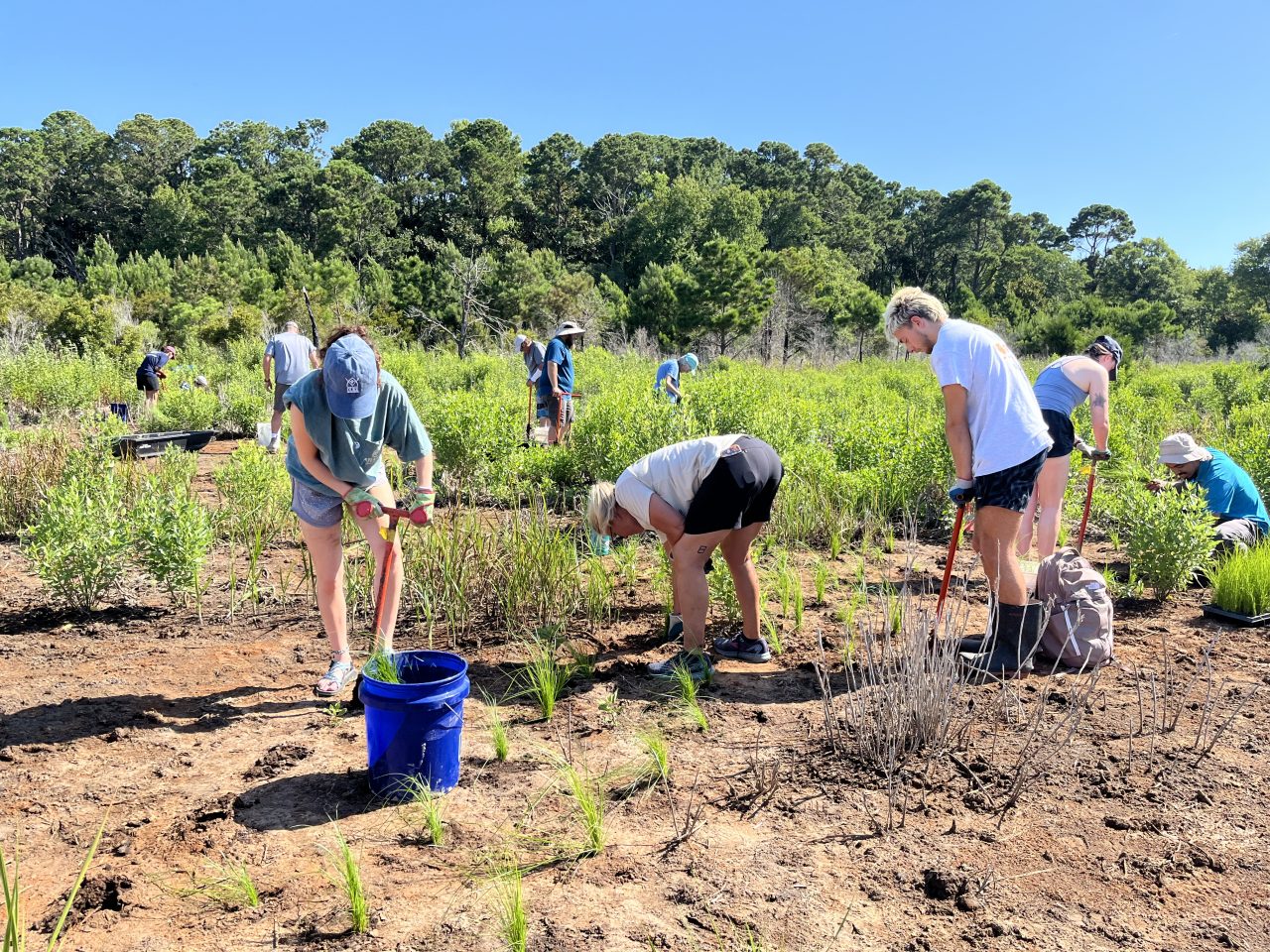
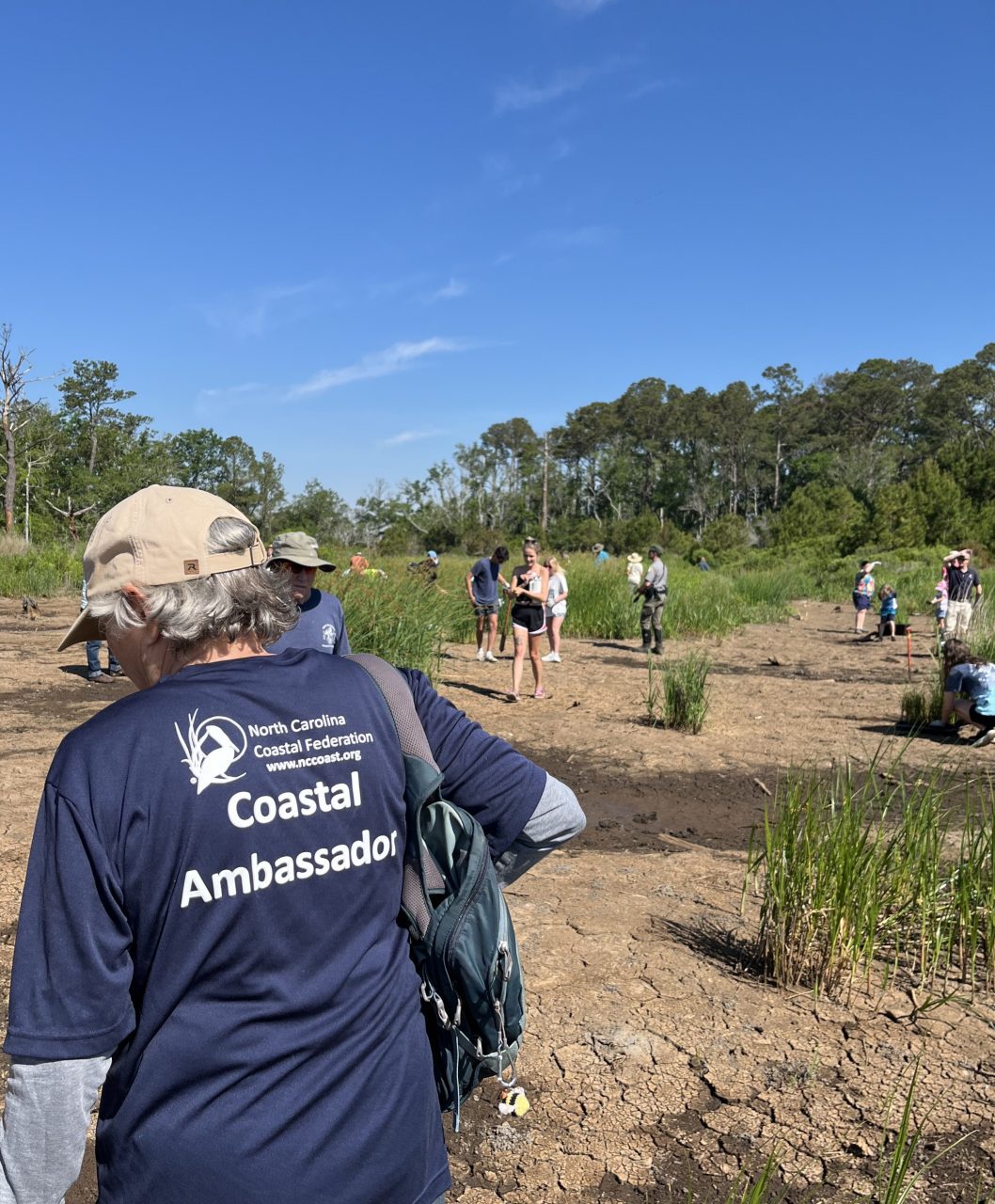
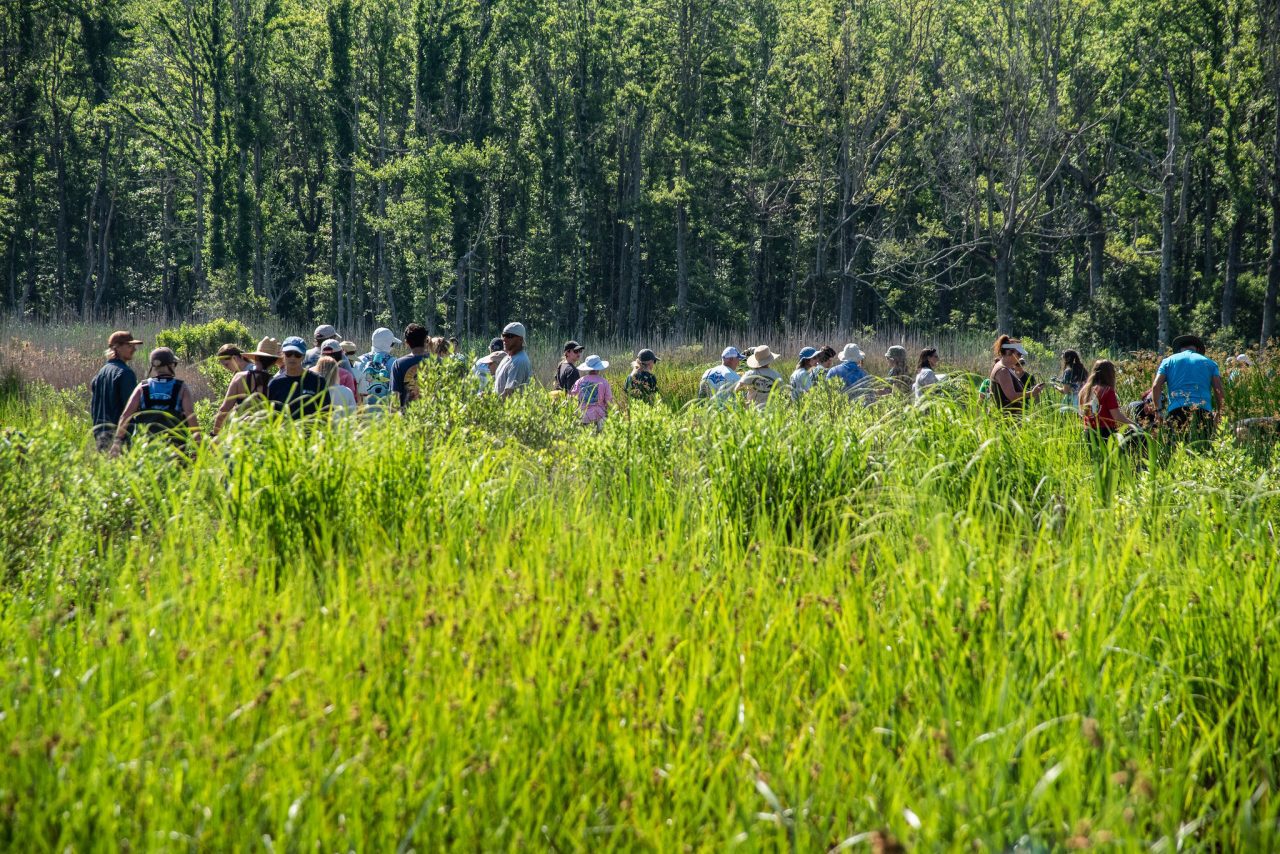
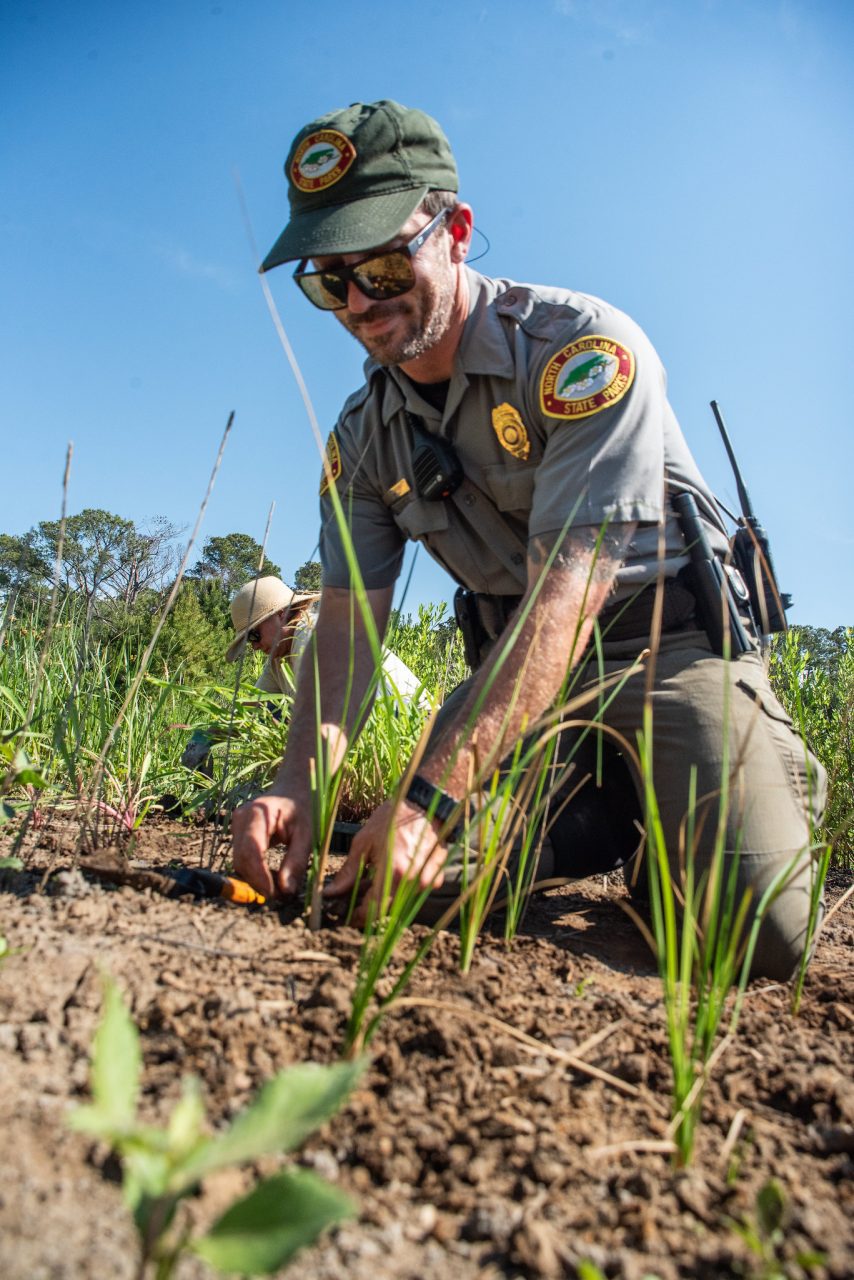
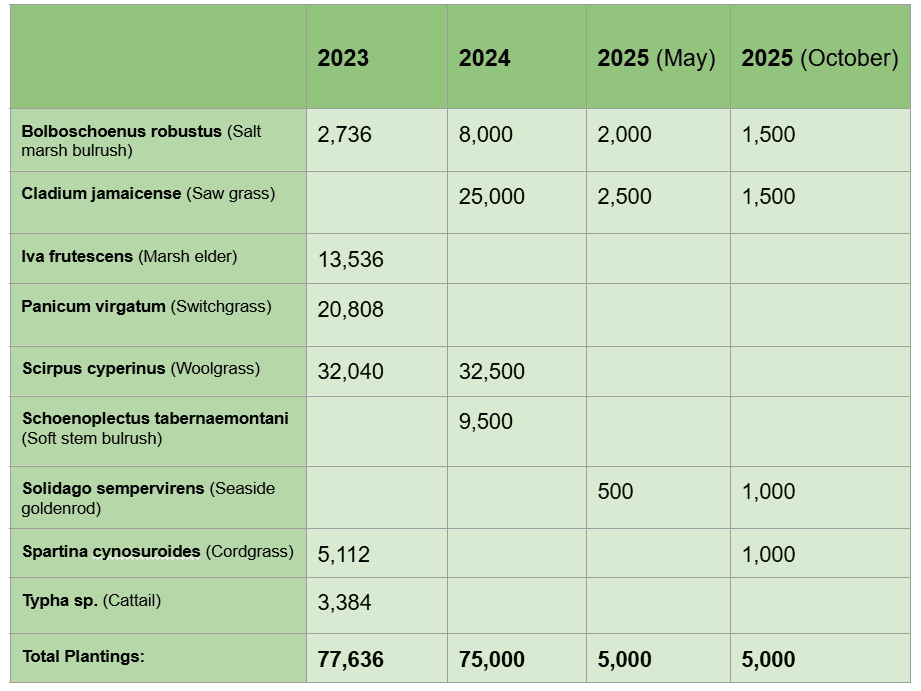
Native Species planted at Carolina Beach State Park throughout Wetland
Acknowledgements
Large-scale, multi-year restoration takes a skilled team with a shared vision. The natural resource managers and law enforcement officers for Carolina Beach State Park have dedicated themselves to the health and future of the park’s habitats through a legacy of positive impacts for all human and non-human park visitors. Our project partners were critical to many years of planning and executing all phases and we greatly appreciate their contributions:
Design & Historical Context
North Carolina Division of Parks and Recreation
U.S. Environmental Protection Agency
Greenfield Multistate Environmental Response Trust – Navassa Superfund Site
Funders
Natural Resources Damages Assessment Trustees
North Carolina Department of Environmental Quality
U.S. Fish & Wildlife Service
National Oceanic and Atmospheric Administration
Contractors
Terrain Environmental Consulting
Backwater Environmental
Mellow Marsh Farms
Ripple EcoSolutions
Andrew Engineers
Intercoastal Marine
If you have any questions about the Carolina Beach State Park Restoration Project, please contact Bree Charron, Water Quality Program Director via email at breec@nccf.org