Bringing Oysters Back
Building Oyster Reefs
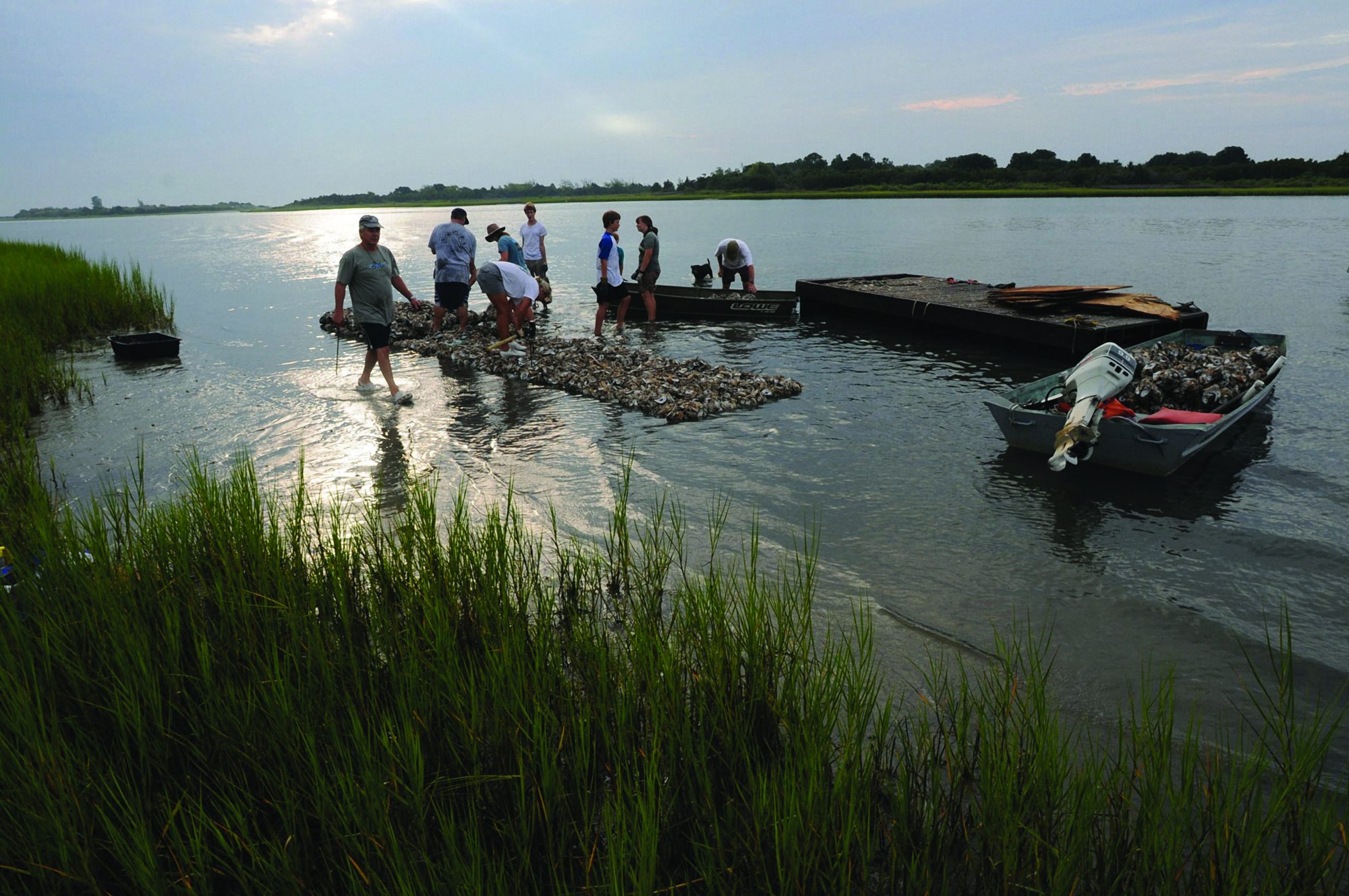
Building new oyster reefs is one of the key strategies used to revive North Carolina’s oyster population.
There are several techniques that can be used to build oyster reefs. These include methods specifically for the habitat and water quality benefits of oysters to be realized. And methods that are used to support wild harvest. Many of these projects are carried out in collaboration with the N.C. Division of Marine Fisheries and other partners.
The new habitat created from these restoration projects provides homes for a multitude of commercially and recreationally important species including blue crabs, shrimp and finfish. Building the reefs relies on the support of marine contractors, scientists, volunteers and others in ways that create jobs for the coastal economy and engages them in active restoration efforts.
Cultch Reefs
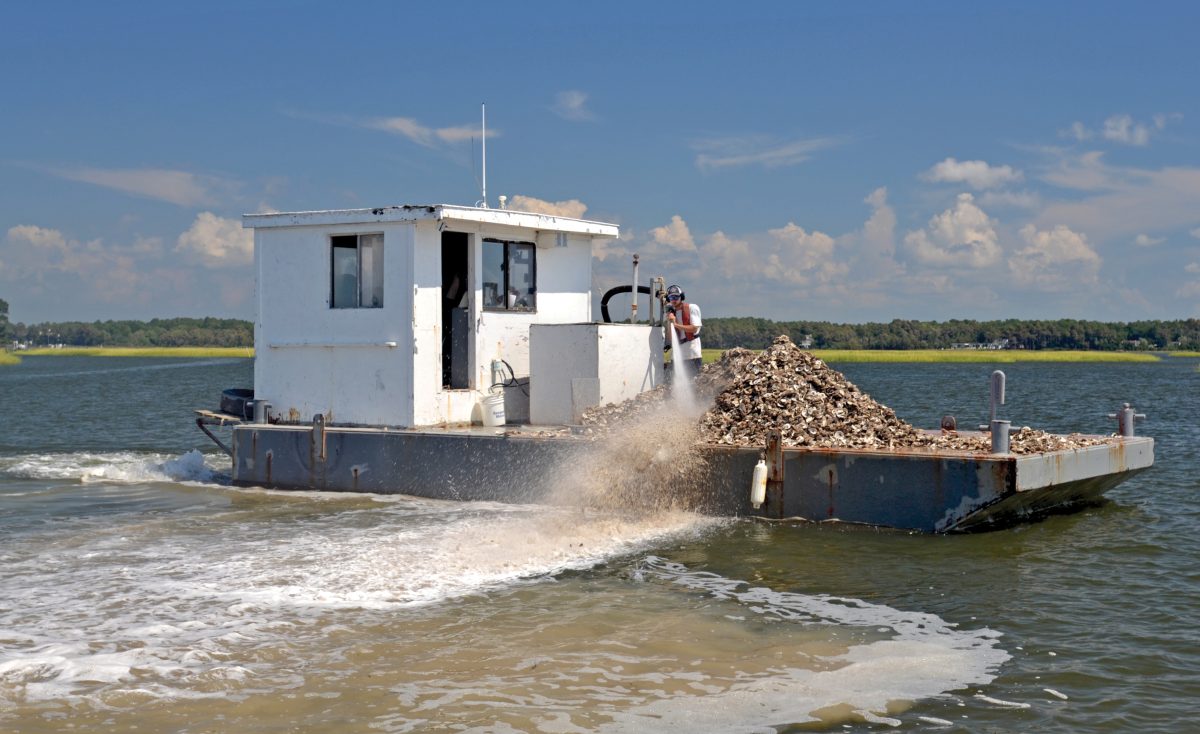
Cultch reefs are built throughout the state’s shellfish waters using limestone marl or recycled shell. These materials are also referred to as “cultch”. Cultch planting sites are open to harvest once oysters reach legal harvest size (3 inches). Visit the N.C. Division of Marine Fisheries website for more information about oyster cultch program.
The federation partners with the N.C. Division of Marine Fisheries in planning and building cultch planted sites through out the state. We partnered on the construction of more than 200 acres of cultch planted sites through a 2009 American Recovery and Reinvestment Act project and a 2017 National Oceanic and Atmospheric Administration community-based restoration project.
Did You Know?
- The Division of Marine Fisheries annually deploys tens of thousands of bushels of shell, marl and other suitable cultch materials to build harvestable reefs.
- The Cultch program has been active in North Carolina since 1915 and helps to supplement wild harvest efforts.
- Nearly 50 acres of cultch planted reefs are built each year.
Oyster Sanctuaries
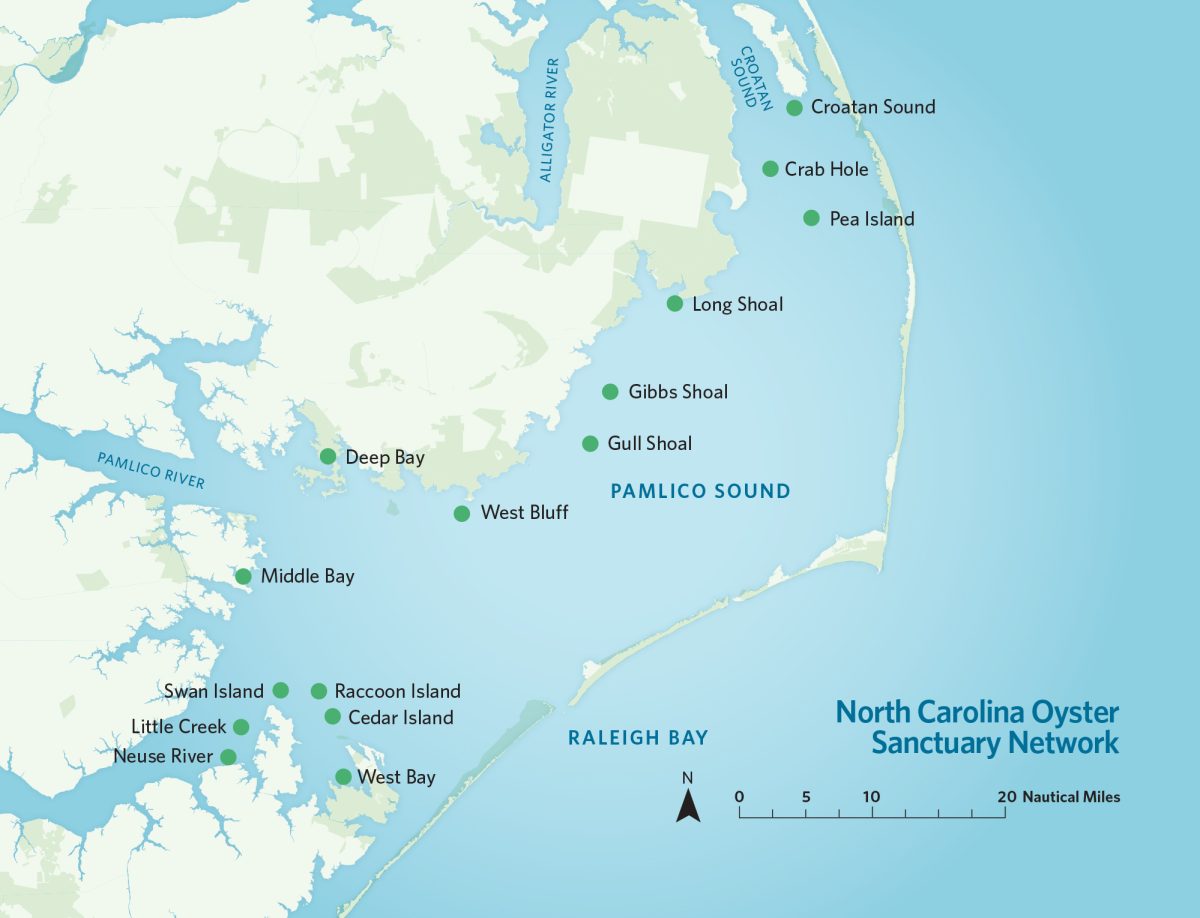
Oyster Sanctuaries are large-scale oyster restoration reefs built in Pamlico Sound. They are typically five to 50 acres in size. Sanctuaries are closed to harvest but open to hook-and-line fishing. They are strategically placed to create reefs that provide reliable oyster larvae that reseed the wild population and cultch planted areas. Recent research indicates that as a restoration strategy, oyster sanctuaries provide more oysters per area and larger oysters per area than other reef types.
The Federation has partnered with the NC Division of Marine Fisheries and a private marine contractor on the construction of four oyster sanctuaries since 2009: Crab Hole, Clam Shoal, Swan Island, and Cedar Island. With a combination of federal grants and state appropriations, this partnership has built over 100 acres of oyster sanctuary in Pamlico Sound.
Did You Know?
- Oyster sanctuaries make up 6% of all oyster reefs in Pamlico Sound, but support nearly 20% of the oyster population.
- Oyster sanctuaries host 10 times more oysters than other reef types.
- For every dollar invested in habitat restoration, $4.05 in benefits are realized from augmented fish harvest to water quality improvements.
Aquaculture
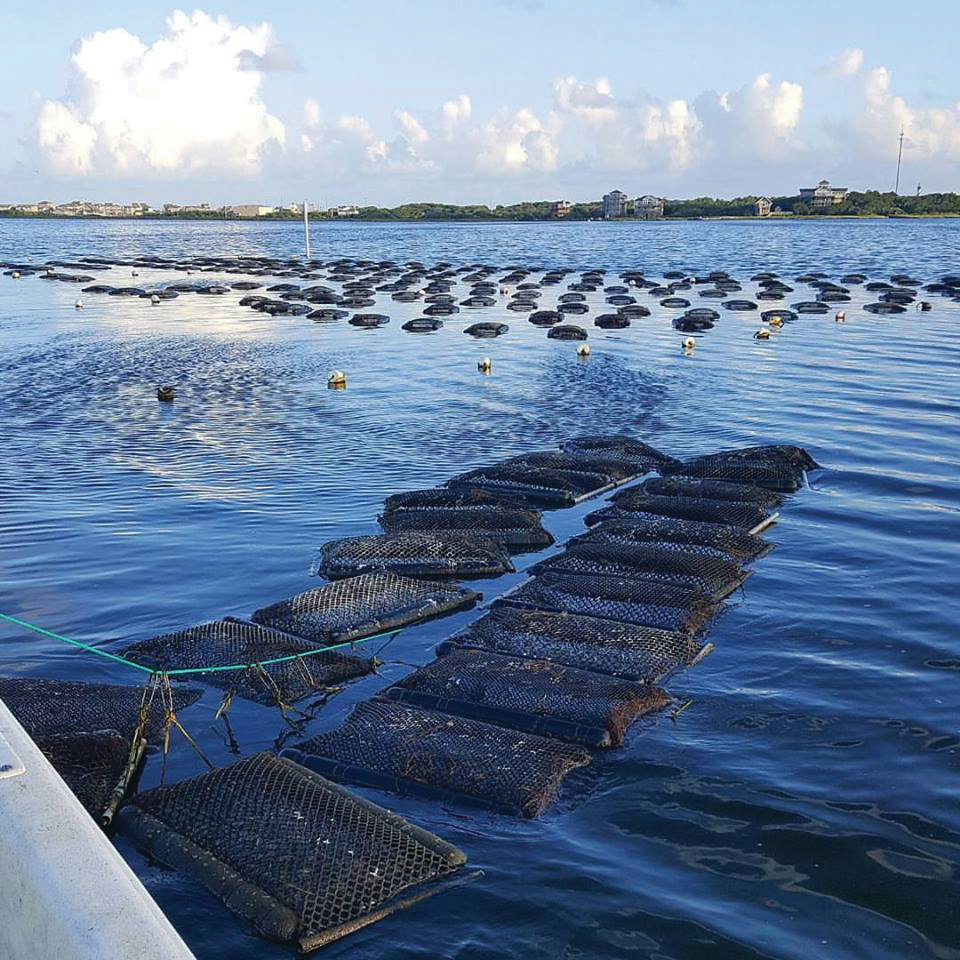
Oyster farming also known as oyster aquaculture or mariculture, has the potential to provide numerous benefits including increased water filtration, additional habitat for fish and other estuarine species, and economic development opportunities for the coastal economy. Oyster aquaculture also has the potential to supplement wild harvest, helping to meet the demand for fresh, local seafood.
To ensure this industry grows to a $100 Million dollar industry by 2030, a goal set by the state’s strategic mariculture plan the Federation is taking strategic efforts to advance the industry.
Did You Know?
- As of 2021, oyster aquaculture was a $30 million industry in North Carolina. This is roughly $5 million in farmgate value. The Federation and partners have set a goal to build this industry to a $100 million industry by 2030. This is equivalent to $33 million in farmgate value.
- Oyster farm size has a vast range spanning from ½ acre to 10 acres. A single farmer can run up to 50 acres of farm, in total.
- There are oyster farms in NC that are located on submerged land claims which were granted by the King.
- Thousand of acres of water in NC could be suitable for growing farmed and wild oysters. A small portion of this water, just a few hundred, could support one of the most vibrant aquaculture industries in the U.S. Think about that: no forests to be cleared; no marshes to be filled: billions of oysters that can grow and help clean our waters right now.
Strategic Efforts
- In 2018 the Federation convened a group of stakeholders that helped author the Strategic Mariculture Plan for North Carolina
- Recognizing that shellfish farms have the potential to contribute to marine debris concerns, the Federation worked with shellfish farmers and NOAA to develop a set of best management practices for shellfish farms.
- To promote the industry and encourage new entrepreneurs, the Federation worked to develop a new loan program, Ramping Up Program to Help Oyster Farmers.
- Recognizing the need for land-based distribution and processing support of aquacultured products, the Federation worked to develop a feasibility study to identify the specific needs and potential solutions, Building Mariculture Public Infrastructure.
- To promote tourism opportunities and encourage support for North Carolina’s shellfish farms and resources, the Federation partnered with the state, N.C. Shellfish Growers and North Carolina Sea Grant to develop the NC Oyster Trail.
- The federation built a demonstration oyster lease at their Wanchese Office to allow people to see a working farm and learn more about the oyster aquaculture industry.
Patch Reefs
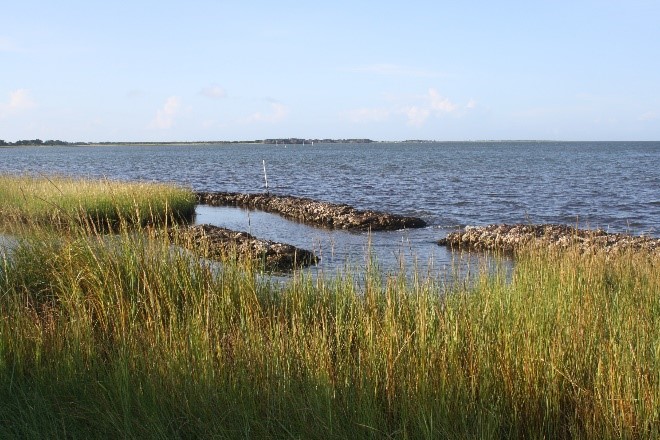
Patch reefs are typically smaller-scale restoration efforts carried out by non-profit organizations, universities, or concerned community groups. The reefs created are typically located to either grow oysters, provide shoreline stabilization, or both.
The Federation builds patch reefs through our restaurant-to-reef program, partnerships efforts with the state and other interested groups, including researchers and estuarine shoreline owners, and through our living shoreline projects that use oysters.
Science Helps to Guide Reef Restoration
Building new reefs is carried out in North Carolina’s estuarine waters that support oyster populations.
There are many important factors to consider in restoring reefs include:
- Are environmental factors suitable to support restoration?
- Have cultural and logistical concerns been factored into the project design?
- Is the water quality safe for oysters to be harvested from here when they are full grown? Especially important for restoring areas that will be open to harvest
- What material and reef “architecture” will be best for my restoration goals?
- How might my restoration activity impact other habitats or water uses?
These considerations and more are factored into the models used for siting reefs. Researchers at NC State University, University of North Carolina Wilmington have partnered with the Division of Marine Fisheries to create these models. The models help oyster restoration practitioners focus their efforts in identifying restoration projects. Additional field work is performed to confirm site conditions are suitable for oyster restoration.
Oyster Resources


Contact Erin Fleckenstein, erinf@nccoast.org, with any questions about the Oyster Steering Committee or to get involved in this coastwide effort.
The Restoration Continues
You can support even more oyster restoration by Adopting an Oyster.