
Commissioned in 1942, Marine Corps Air Station (MCAS) Cherry Point, located in Havelock, North Carolina, has served as an important hub for Marine Corps aviation for more than 80 years. The installation spans approximately 11,600 acres and includes over 16 miles of shoreline. The Cherry Point community consists of more than 38,000 individuals, including active duty and retired Marines, civilian personnel, and their families.
Environmental studies conducted by MCAS Cherry Point identified significant erosion along the Neuse River shoreline, with more than 100 feet of shoreline retreat documented in some areas since 1994. Following the severe impacts of Hurricane Florence in 2018, the Air Station faced accelerating shoreline loss and failing bulkheads, placing recreational facilities, housing, training spaces, and operational readiness at risk.
The Project
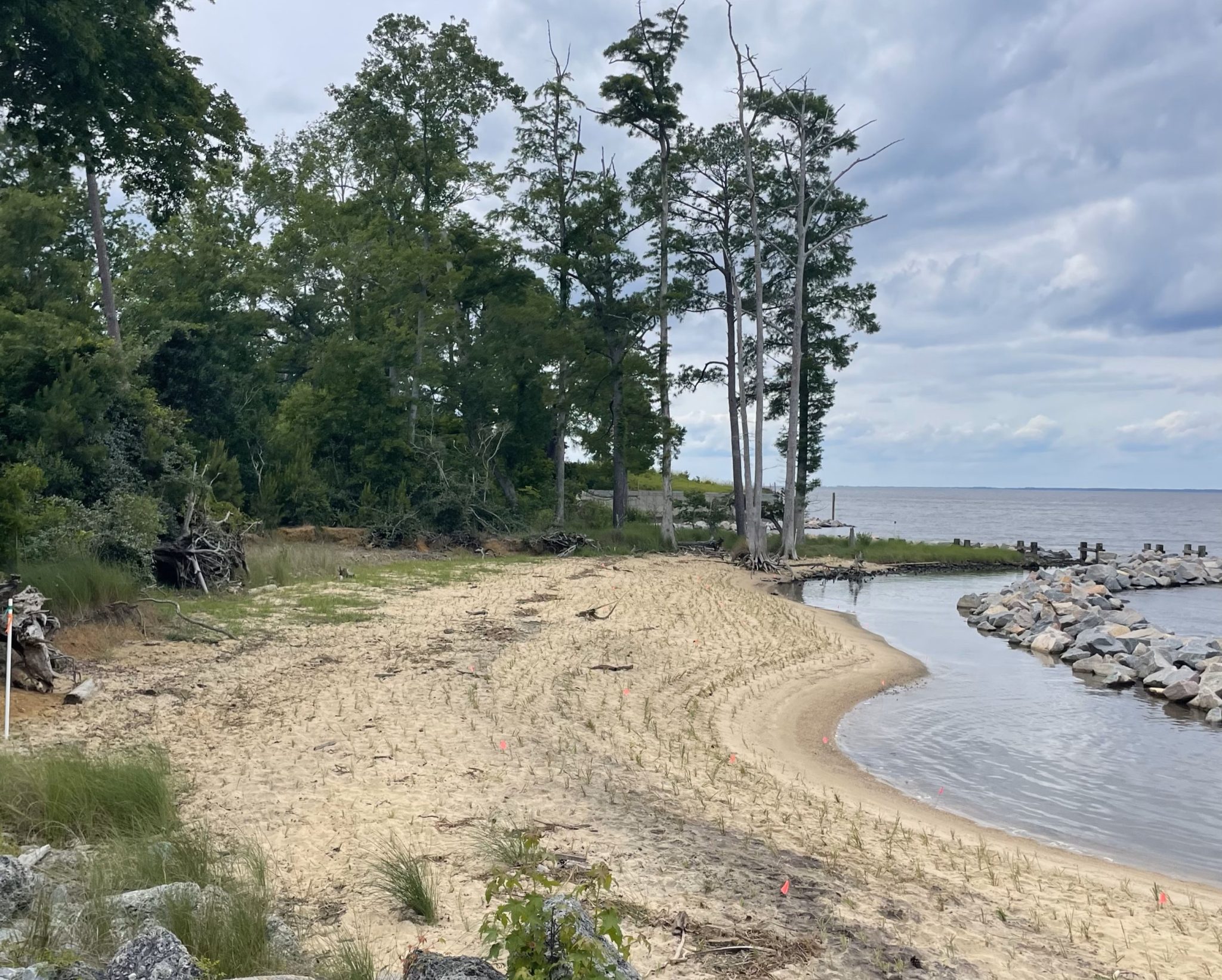
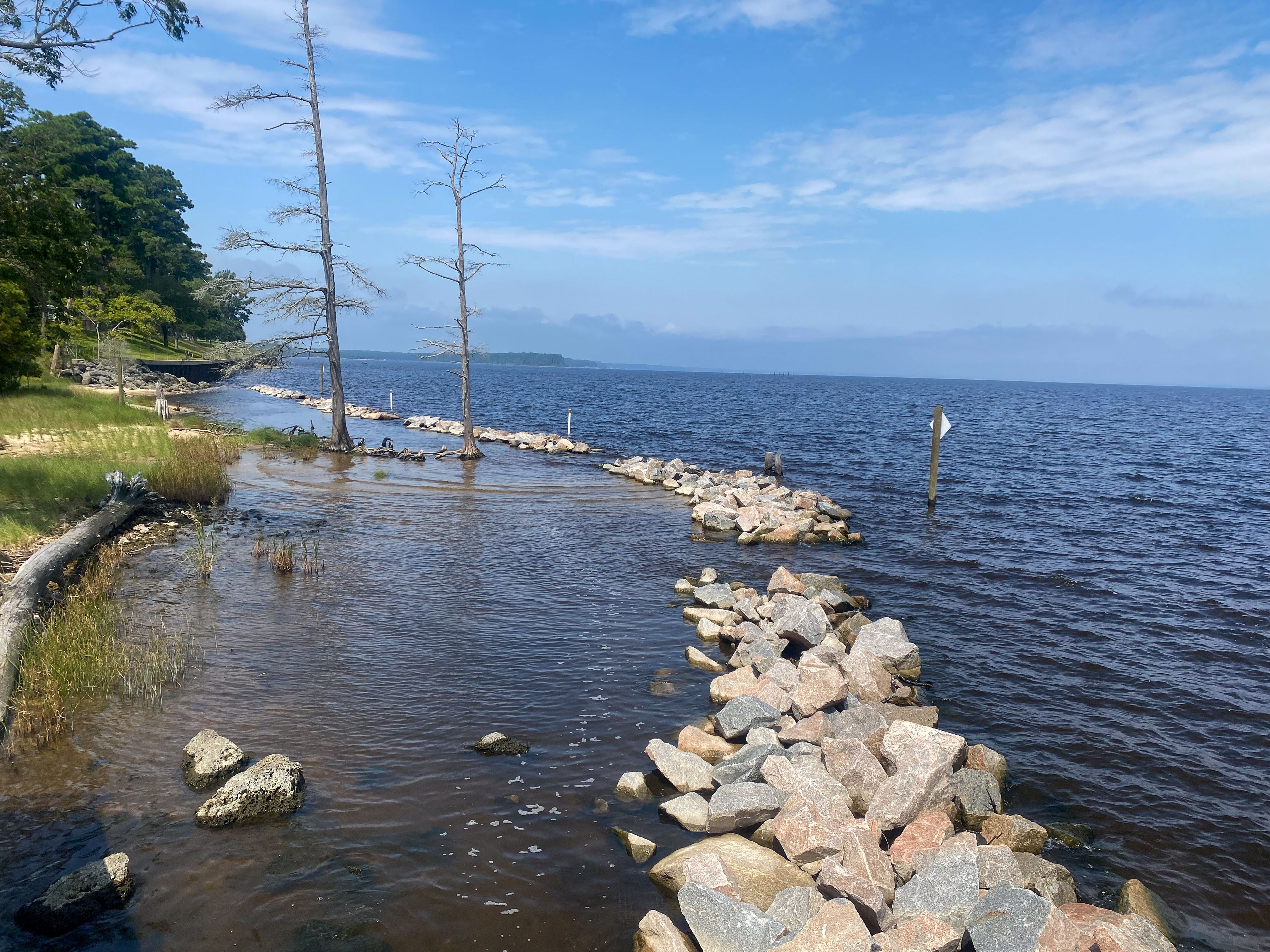
In many areas along the shoreline, existing infrastructure prevented the removal of the failing bulkheads, so those structures were repaired. To extend their lifespan and to protect eroding areas without bulkheads, the Air Station constructed a 9,700 linear foot living shoreline sill. An additional 2,029 feet of sill was built in partnership with the Coastal Federation, bringing the total to over 11,700 linear feet. The full living shoreline project was completed in the fall of 2025.
MCAS Cherry Point’s decision to incorporate living shorelines into its restoration design demonstrates how military installations can align mission readiness with environmental stewardship. The sill structures will reduce wave energy, and as native marsh vegetation becomes established, it will stabilize the shoreline and form a resilient buffer against erosion and storm impacts. This nature-based approach helps protect infrastructure critical to MCAS Cherry Point’s operations, reduces long-term bulkhead maintenance needs, and restores ecological function by enhancing habitat for fish, crabs, birds, and other wildlife.
Funding for the portion of the living shoreline constructed by the Federation was provided by the North Carolina Land and Water Fund and the Department of Defense Readiness and Environmental Protection Integration (REPI) Program, administered through the National Fish and Wildlife Foundation. Quible & Associates oversaw construction, Coastal Wildlife Consultants installed the sill structures, and Native Shorelines planted the shoreline with native grasses.