Empowering coastal communities to shape a more resilient future
Along North Carolina’s coast, every community has a unique story—shaped by its people, its history, and its connection to the environment. The North Carolina Coastal Federation is committed to building on those strong connections to ensure our communities and coastal environment remain strong and resilient for generations to come.
This innovative initiative, funded by the SECU Foundation, the Pew Charitable Trusts, and the National Fish and Wildlife Foundation, supported five rural, underserved coastal communities to envision a more resilient future and build the capacity needed to turn local priorities into action.
Recognizing that many small communities face significant barriers to resilience—including limited access to planning resources, technical expertise, and funding—the Coastal Federation partnered with residents, local leaders, state agencies, nonprofit organizations, and technical experts to create a new model for locally driven resilience planning. At the heart of this effort was a simple but powerful approach: listen first. Rather than arriving with predetermined solutions, the Federation invested time in building trust, understanding community experiences, and supporting residents as they identified the challenges and opportunities most important to them.
Through nearly 20 community meetings, workshops, and outreach events, hundreds of residents helped shape resilience strategies tailored to their communities. Across Carteret, Hyde, Dare, and Tyrrell counties, residents identified priority projects, built new partnerships, and developed a roadmap for addressing challenges ranging from flooding and erosion to land conservation, drainage, and infrastructure needs.
The impacts of this collaboration are clear, with a portfolio of more than 30 projects identified and each of the five communities moving forward with top-priority projects to support long-term resilience.
Perhaps the greatest achievement of this initiative is the strong foundation it created for the future. Communities are now connected to a network of partners, equipped with actionable plans, and better positioned to pursue funding and implementation. By placing residents at the center of decision-making, this initiative demonstrated that the strongest resilience solutions are those built with communities—not for them. Together, these communities are leading the way toward a more resilient North Carolina coast.
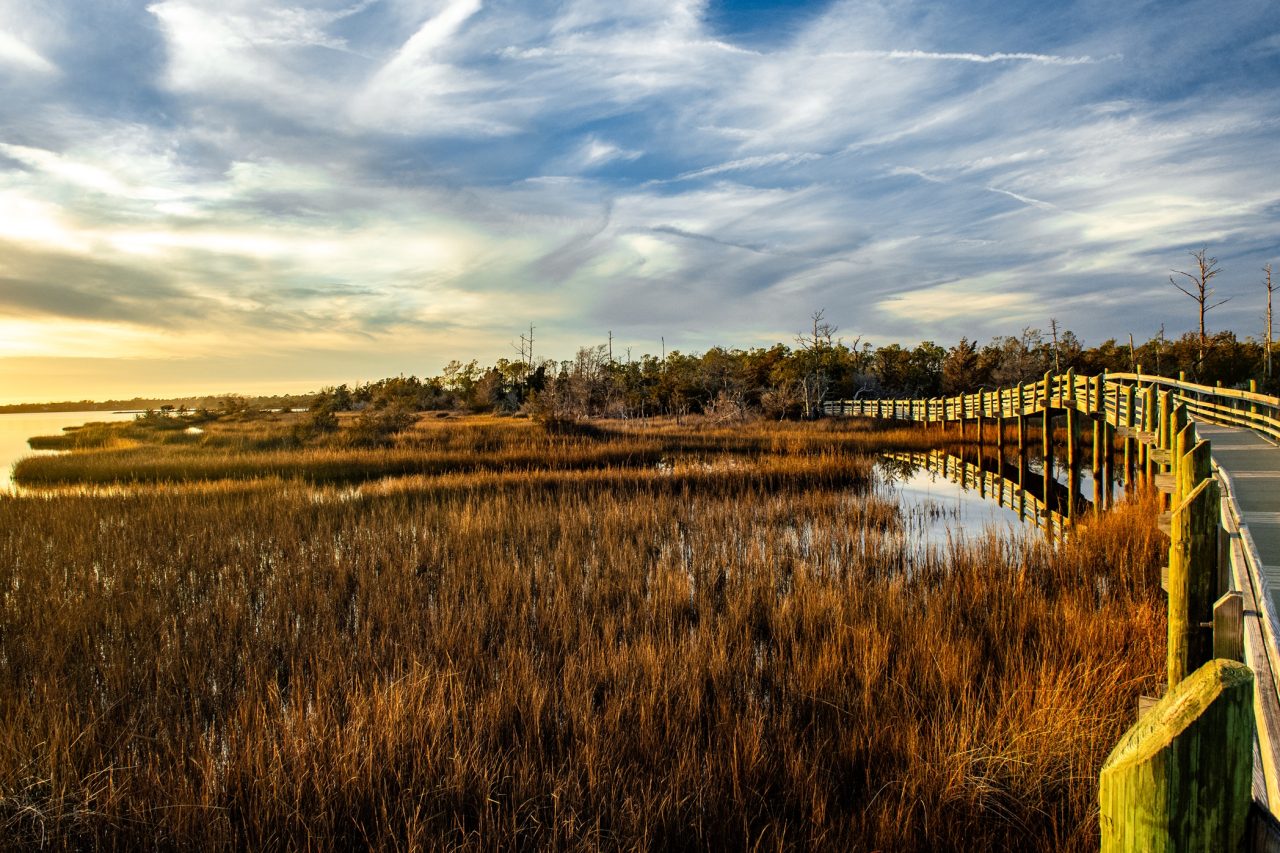
Hatteras Island
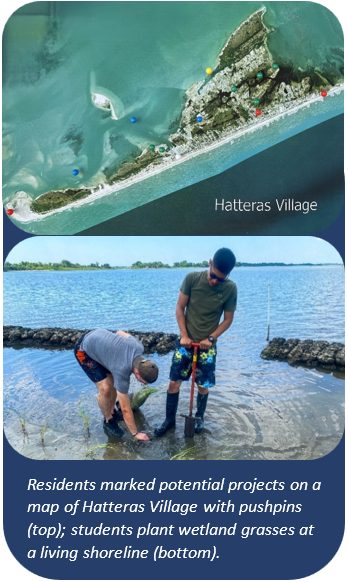
On Hatteras Island in Dare County, the Federation worked with the communities of Buxton, Hatteras Village and Frisco to identify solutions that reflect the community’s priorities and protect its future. Through meetings and in-person community engagement, residents shared their experiences and concerns related to flooding, erosion, and a changing coastline, helping shape a locally driven resilience plan.
A top resilience priority identified by the community was a living shoreline project at Cape Hatteras Secondary School to help address erosion, protect coastal infrastructure, and restore habitat. The project will also serve as a living classroom, supporting hands-on education for local students for years to come. Design and permitting for the living shoreline began in 2026, and construction funding is secured. The community will continue to identify additional actionable projects. By ensuring that community voices guided the planning process
Alligator Township
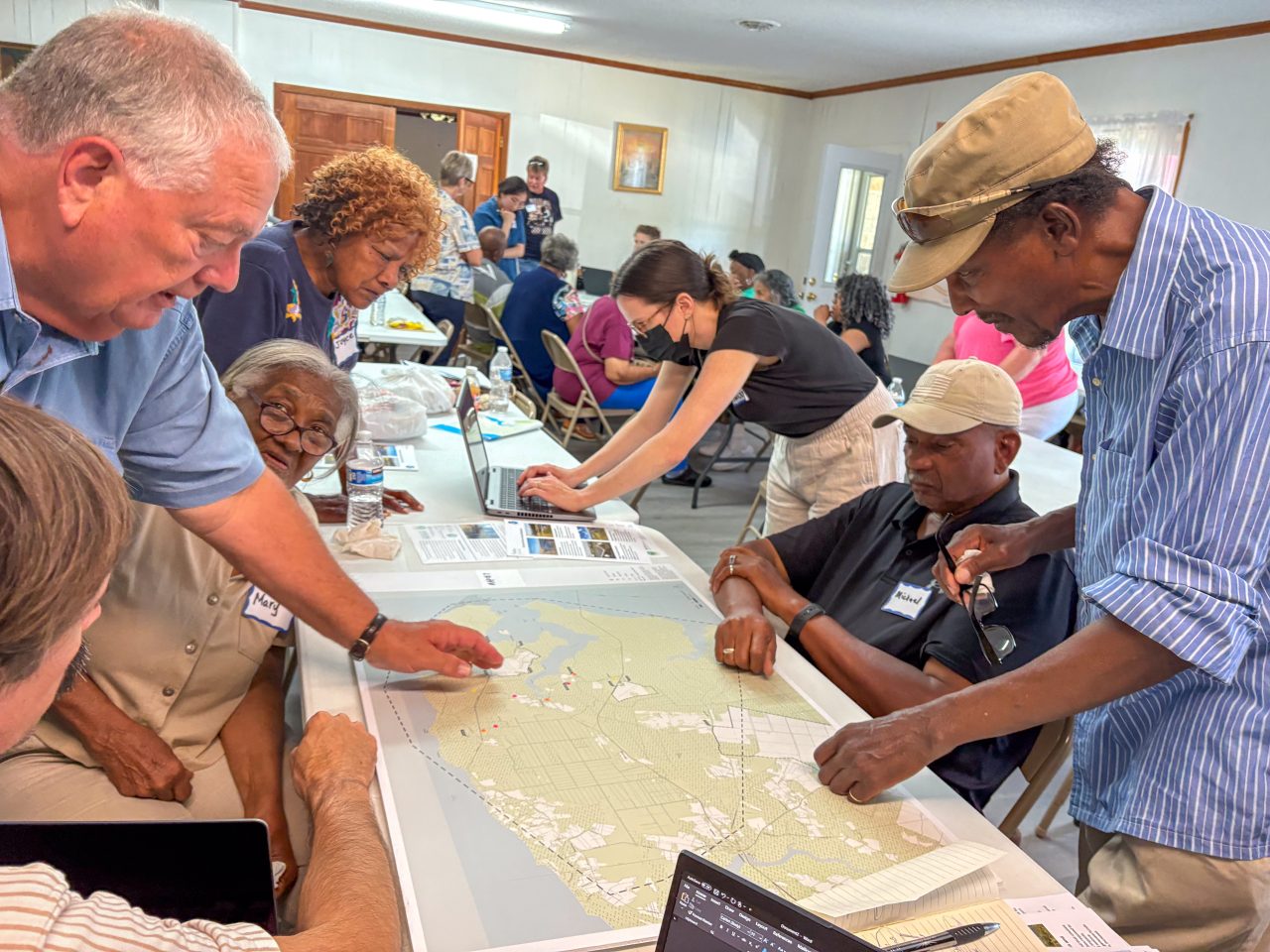
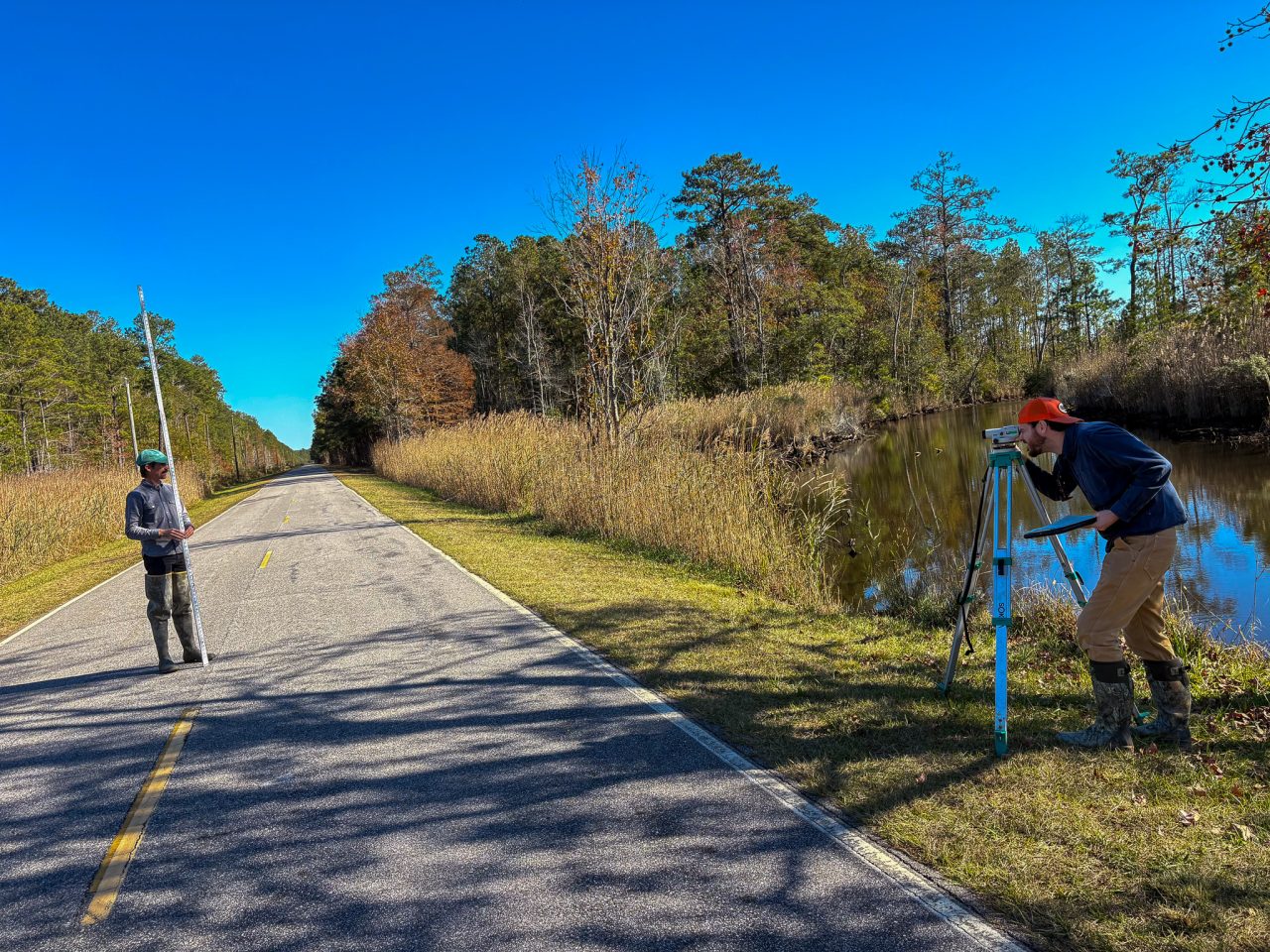
In Alligator Township, an unincorporated community in Tyrrell County, two local problems quickly rose to the surface in community conversations: persistent flooding of homes and the erosion of a beloved community beach and access point to the Albemarle Sound in the Palmetto-Peartree Preserve. In-person collaboration between the community and engineers helped identify the root causes of flooding issues and shape strategies to protect important natural resources and community assets.
A major outcome of this effort was the conceptual design of a living shoreline and drainage improvements at Palmetto-Peartree Preserve. The project is designed to reduce flooding impacts, address shoreline erosion, and enhance the resilience of this important community resource. Residents were able to connect with County leaders to provide valuable input throughout the planning process, helping ensure that proposed solutions align with local knowledge and long-term needs.
North River and Merrimon
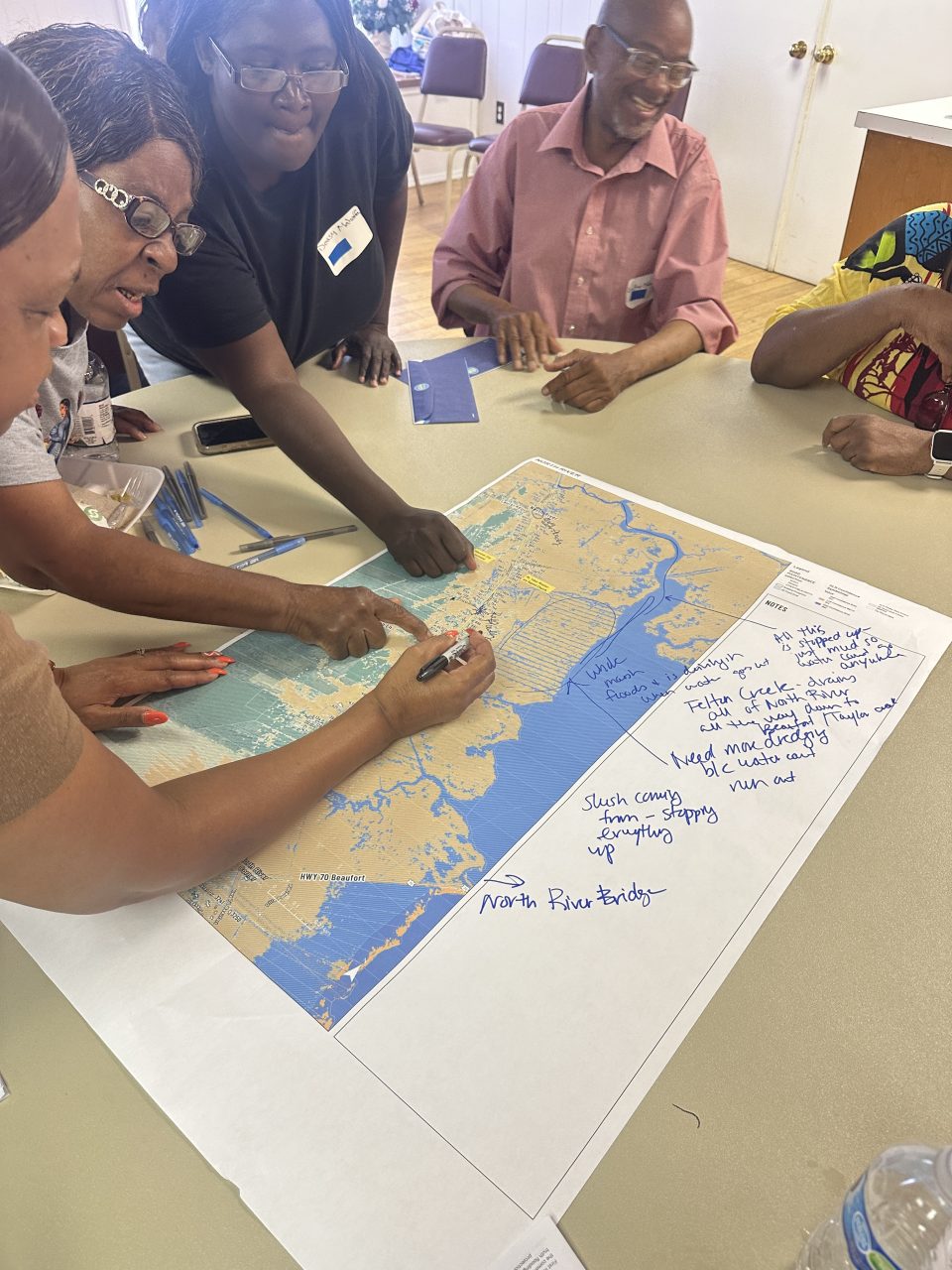
In Down East Carteret County, the Federation worked with two neighboring communities, North River and Merrimon, that are wrestling with issues of flooding, habitat loss, and environmental justice. This initiative brought residents, local leaders, and technical partners together to develop solutions that support the communities’ short- and long-term needs. Through listening sessions, community meetings, and ongoing collaboration, residents helped identify priorities that reflected both the environmental challenges facing the area and the needs of the people who call it home.
A key focus of the effort was exploring land conservation strategies to support marsh migration, provide flood storage, and protect vulnerable areas. Six parcels totaling more than 2,000 acres were identified as top priorities; appraisals will be completed in 2026 to support future grant applications. The initiative also identified an additional 400-acre parcel with potential for wastewater solutions, future home relocation opportunities, and public access improvements with educational signage.
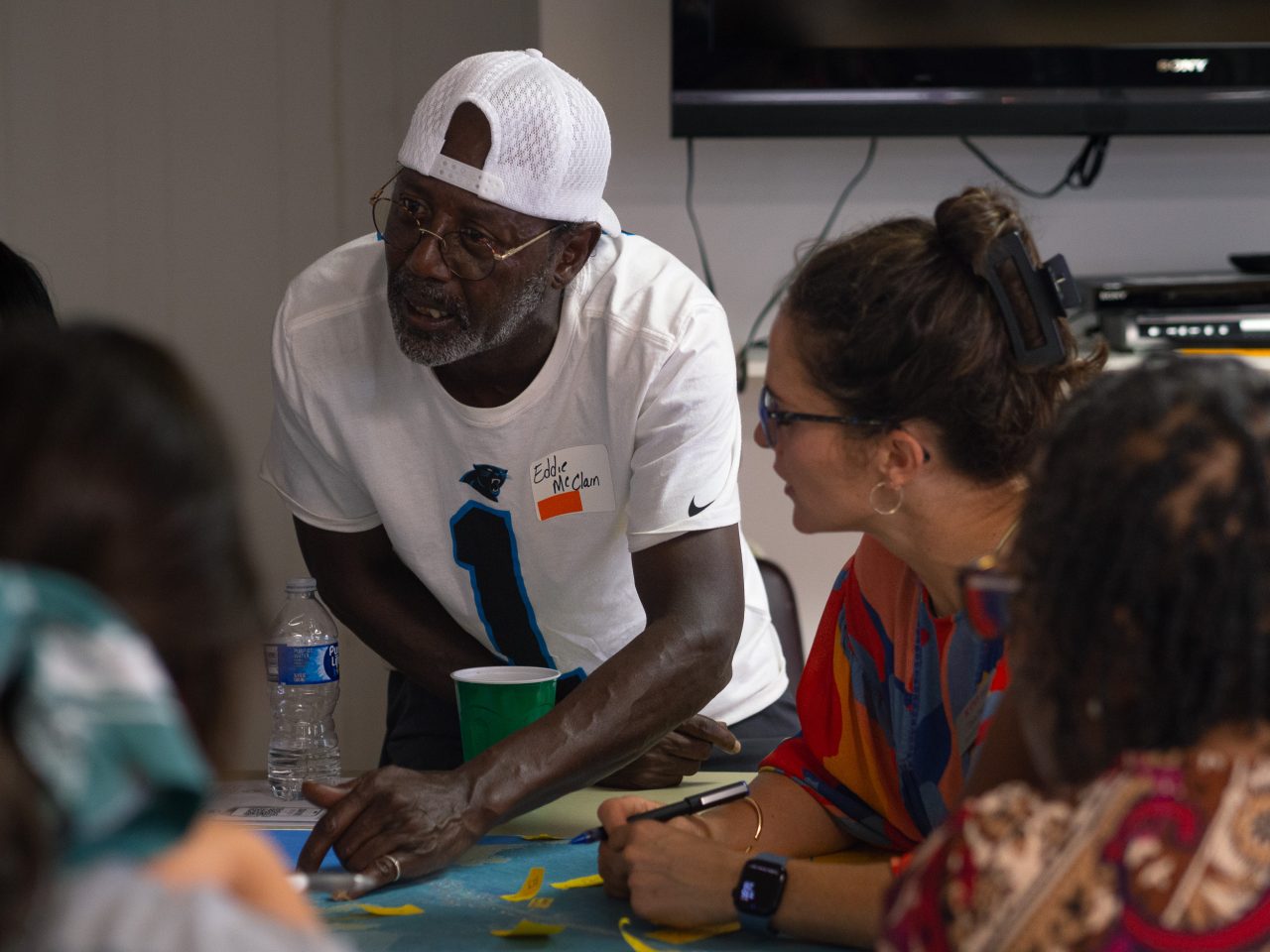
Importantly, this work extended beyond coastal restoration by addressing broader community resilience needs. When the top priorities identified were wastewater and infrastructure needs, the Federation brought in partners including N.C. State University, Lighthouse Environment Partners, N.C. Department of Environmental Quality, and the U.S. Environmental Protection Agency to explore solutions. By putting immediate needs of the community, such as home elevations and failing septic systems, ahead of resilience objectives, these relationships grew stronger, and the community was receptive to pursuing environmental projects.
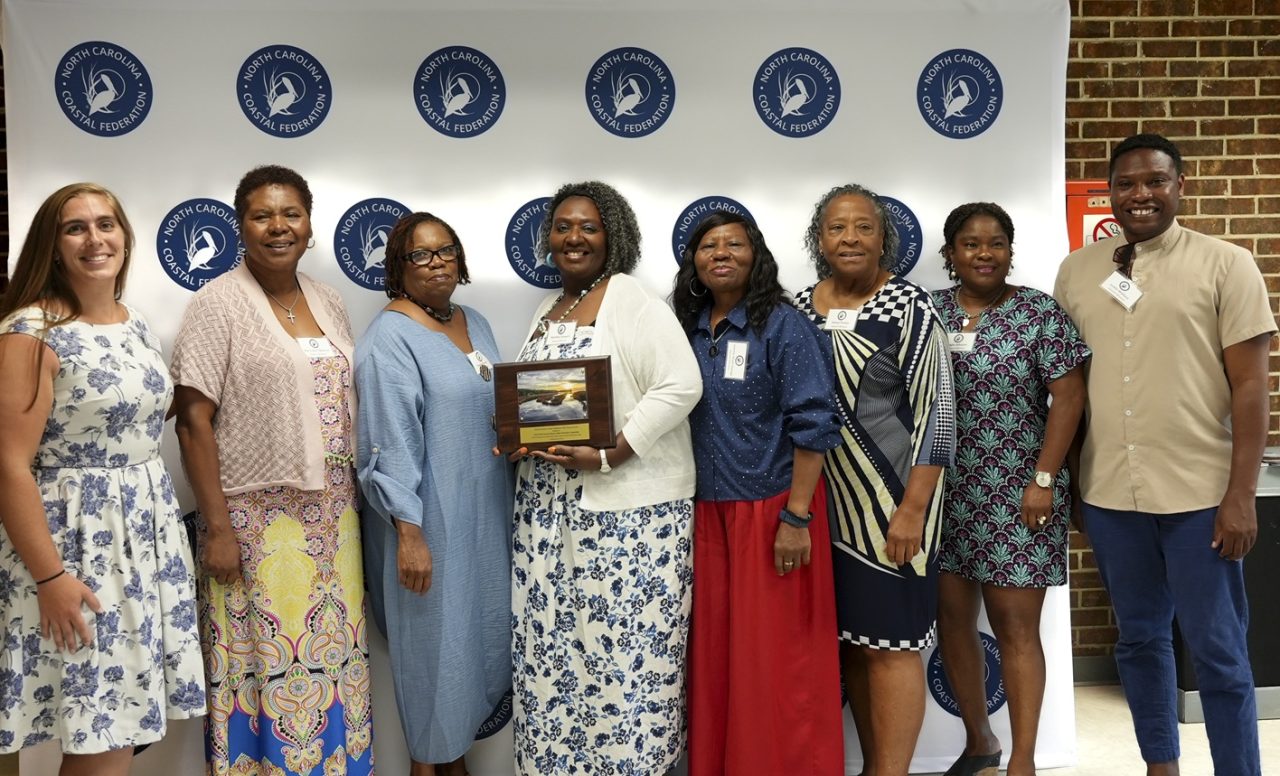
As a result of these relationships, more than ten projects were identified, many of which are moving forward in the short term. The North River Laurel Road Ladies Outreach Committee was recognized by the Federation with a Pelican Award in 2026 for their local leadership and community organizing.
Through this initiative, North River and Merrimon have strengthened their capacity, built lasting partnerships, and developed a clear pathway toward implementing community-driven resilience solutions.
Hyde County
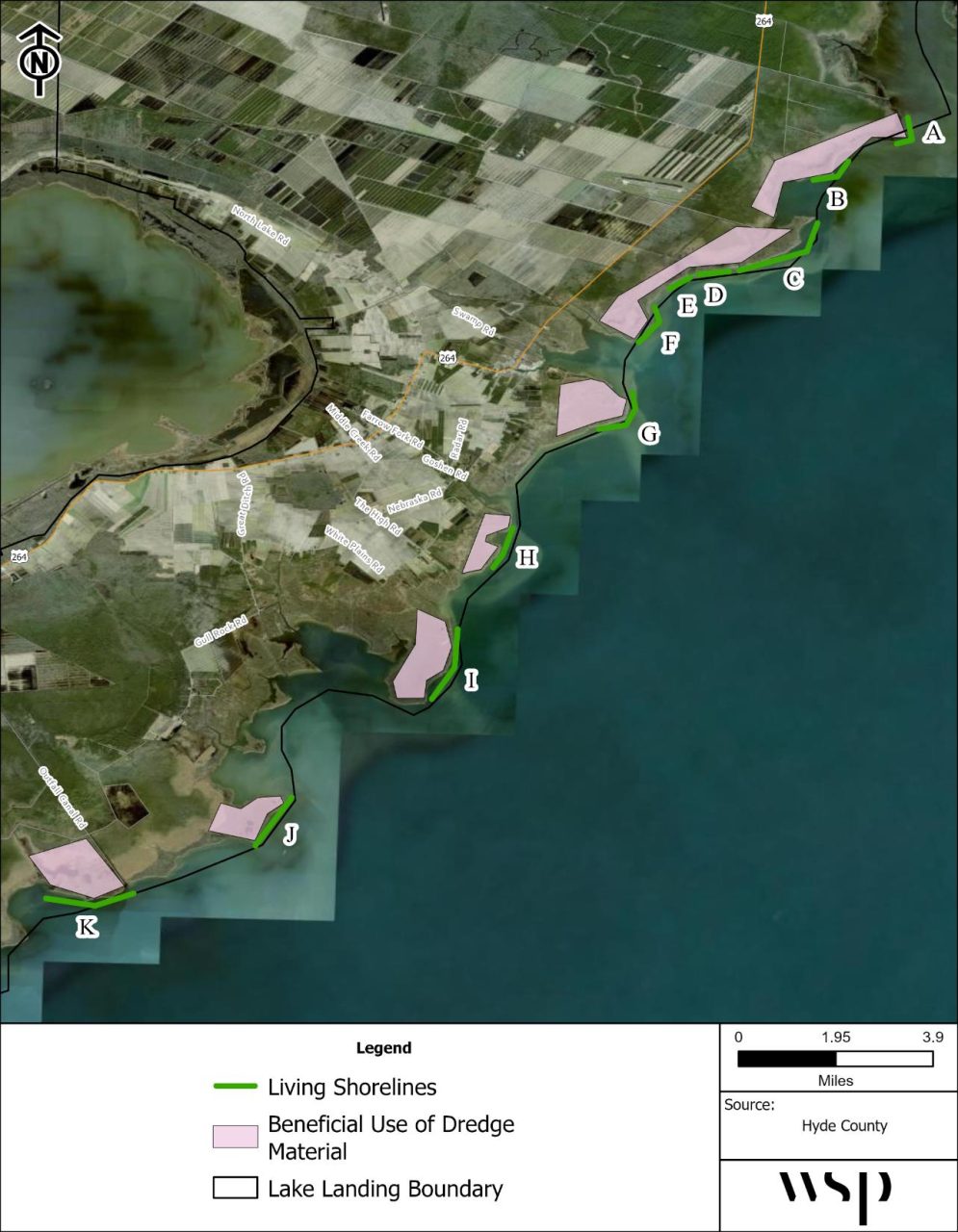
In Hyde County, the Federation partnered with the Lake Landing Township that includes the community of Engelhard and the N.C. Department of Environmental Quality’s Resilient Coastal Communities Program to assess vulnerabilities, identify solutions, and develop a roadmap for future investments. Through this process, the community developed a portfolio of resilience projects focused on addressing local challenges and strengthening long-term preparedness, addressing issues including erosion, flooding, saltwater intrusion, shoreline stabilization, resilient dock structures, and innovative use of dredge material to combat sea level rise.
The effort also supported updates to Hyde County’s CAMA Land Use Plan, ensuring that community priorities and resilience strategies are integrated into future planning efforts. By connecting residents with technical resources, state partners, and funding pathways, the initiative strengthened local capacity and positioned Engelhard to pursue implementation of community-driven solutions.
The Path Forward
The work accomplished through the Community-Led Coastal Resilience initiative has created a roadmap for meaningful investment in the future of our coast. Through collaboration, trust-building, and community-driven planning, five rural coastal communities now have clearly defined resilience priorities, strong partnerships, and a pipeline of more than 30 projects ready to move from vision to implementation. These communities are now positioned to pursue funding and advance solutions that address flooding, erosion, habitat protection, and critical infrastructure needs.
The North Carolina Coastal Federation will continue working alongside communities and partners to help implement top-priority projects to build coastal resilience. From living shorelines and marsh migration corridors to drainage improvements and land conservation, these efforts will strengthen coastal communities while protecting the natural systems that sustain them.
This initiative has shown that when communities have access to resources and expertise, they can create lasting change—building a stronger, more prepared, and more resilient North Carolina coast for generations to come.
Thank you to our project supporters, including the N.C. SECU Foundation, the National Fish and Wildlife Foundation, and The Pew Charitable Trusts, as well as the numerous partners who collaborated on this initiative.